
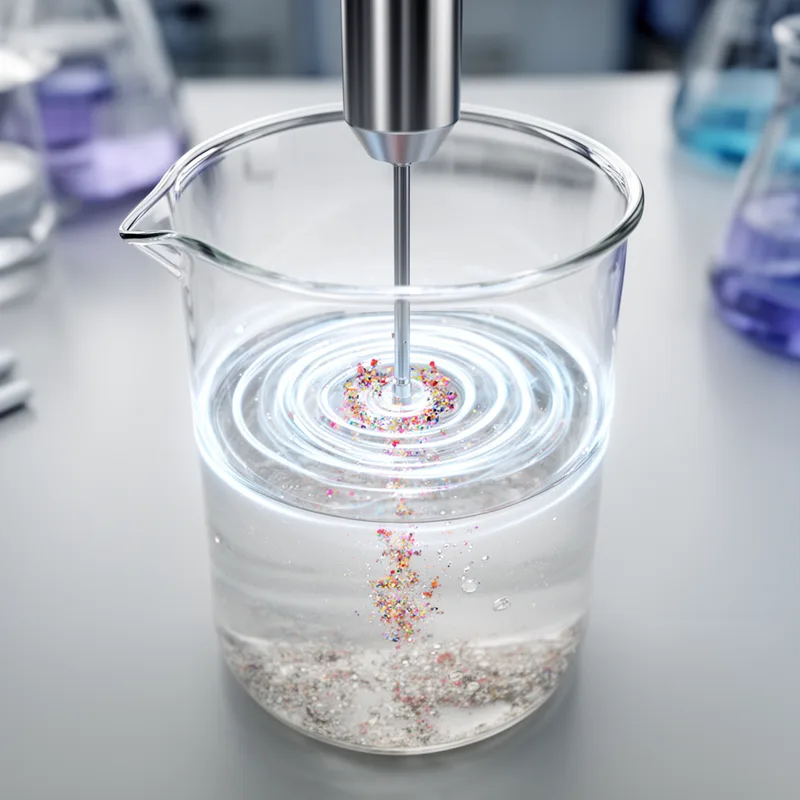
sonication


 1
8.9
- noun
- /ˌsɒnɪˈkeɪʃən/
- Specialized
- Initial lysis was done by a 30-second cell disruption via sonication.
Examples
-
The centrifuge tube was placed in an ultra-sonication bath and sonicated for 30 minutes to complete the precipitation of calcium phosphate.
Academic text (2018) -
For optimal results, they conducted sonication to agitate the solution before proceeding with the experiment.
-
Homogenates were lysed on ice for 30 min, followed by sonication.
Academic text (2017) -
Sonication was performed to shear the chromatin to generate DNA fragments with a size range of 400 to 500 base pairs.
Academic text (2017) -
Labeled 13C internal standards and 1 mL 3% iso-propanol in water were added after 60 min, followed by another sonication.
Academic text (2012) -
Briefly, 20 million cells were crosslinked with 1% formaldehyde for 10 minutes while sonication was performed using a Bioruptor (Diagenode).
Academic text (2017) -
The researchers used sonication to break up the particles in the liquid sample for analysis.
-
The researchers opted for sonication to ensure that the cell membranes were effectively disrupted.
How Intense

Surface Forms
Morphology
Etymology
Sonication comes from an old Latin word sonus meaning 'sound' and the ending -ation meaning 'a process'. So sonication is the process of using sound waves to shake, break, or mix tiny bits in a liquid, which is why the word literally means 'using sound' to do that.