

solubility
 2
4.8
2
4.8

- noun
- /ˌsɒl.jəˈbɪl.ɪ.ti/
- Specialized
- The researchers measured the solubility of various salts in different solvents to see how they behaved.
- protein solubility
- increase the solubility
- low solubility
Loading YouTube…
Watch on YouTubeAnd the pH effects everything from the solubility of metals.
- And the pH effects everything from the solubility of metals.
Examples
-
In order to remove TSS and BOD from the wastewater, chemicals are used to change the solubility of the wastestream's constituents.
Academic text (1998) -
Consequently, the low solubility of oxygen in water mandated large circulation rates.
Academic text (1996) -
And the pH effects everything from the solubility of metals.
-
The maximum solubility of sulfur in iron at room temperature is 0.002%.
Academic text (2016) -
Previous studies have indicated that surfactants are able to increase the solubility and movement of inorganic and organic materials within coastal environments.
Academic text (2018) -
Protein solubility may be influenced by the ratio of hydrophilic to hydrophobic amino acids.
Academic text (2014) -
An organic contaminant will distribute among the four soil phases in relation to its solubility, volatility, and ionic charge.
Academic text (1995) -
The protein solubility was higher in the alkaline region, with maximum solubilization (92%) observed at pH 10.
Academic text (2014) -
The solubility of sugar increases in hot water, allowing it to dissolve more readily.
-
A key factor in determining the solubility of a substance is its temperature.
Synonyms
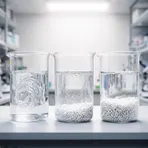
How easily a substance mixes into a liquid

The ability to dissolve in a liquid like water
Antonyms

How Soluble
- Specialized
2
4.8

- Specialized
Surface Forms
Morphology
Etymology
Solubility comes from the Latin root solv- which means 'to loosen', and it is the same root as solve and solution. So in chemistry, solubility is how easily a substance can be 'loosened' into a liquid or can dissolve.