

solanaceous
- adjective
- /ˌsoʊləˈneɪʃəs/
- Specialized
- Farmers often plant solanaceous crops because they are vital to many cuisines around the world.
Examples
-
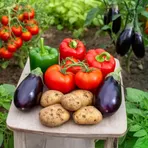
Many gardeners grow solanaceous plants, such as eggplants and peppers, for their nutritious fruits.
-
Chili pepper (Capsicum annuum L.) is one of the most important members of solanaceous vegetables grown in Pakistan and is ranked third after potato and tomato (Iqbal et al., 2012).
Academic text (2014) -
To make a long story short, that holy grail has been found in members of the solanaceous plant family such as eggplant, peppers, and tobacco.
Blog text (20) -
Unfortunately, so does a quartet of subtropical fruit fly pests: the Oriental fruit fly, melon fly, Mediterranean fruit fly, and solanaceous (Malaysian) fruit fly.
Academic text (2001) -
The solanaceous family includes popular vegetables like potatoes and tomatoes.
Compounds
- Specialized
A vegetable that comes from plants like tomatoes, peppers, potatoes, and eggplants
Surface Forms
Morphology
solanaceous = Solanaceae (opaque) = solan + aceous
The adjective is formed with the scientific suffix -aceous from the botanical family name Solanaceae, but that base is specialized terminology and not easily inferable for most learners.
Etymology
Solanaceous comes from the Latin plant name solanum, the old name for the nightshades like potatoes, tomatoes and eggplants, which makes the idea easy to picture. So a plant called solanaceous is 'belonging to the nightshade family' or related to those common crops.

