
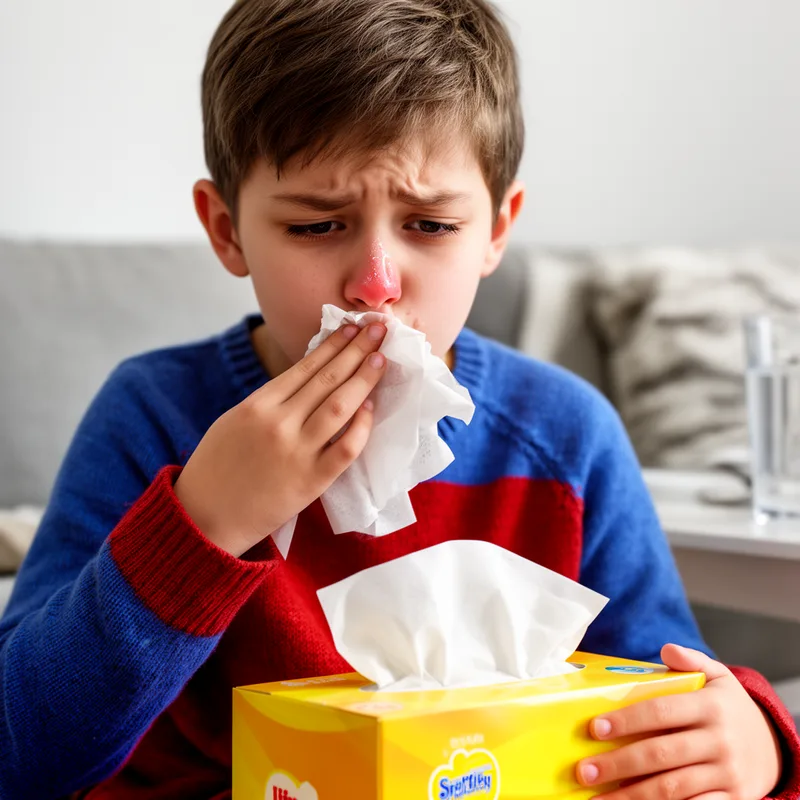
snuffling
- adjective
- /ˈsnʌflɪŋ/
- The snuffling child couldn't stop sniffing during the movie.
Examples
-
A snuffling sound came from under the puppy's blanket as it searched for food.
-
Even after her cold improved, she was still slightly snuffling in the mornings.
-
The snuffling child kept reaching for tissues during the movie.
-
I heard a snuffling sound coming from the other room.
-
The dog lay on the floor, snuffling as it slept due to its cold.
-
She sat next to him, snuffling softly because she was feeling unwell.
-
The baby was snuffling incessantly after catching a little cold.
Synonyms
 1
4.6
1
4.6

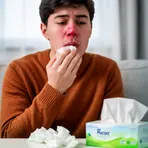
Having a runny nose and often making soft nose sounds because of a cold or allergy
 1
8.6
1
8.6
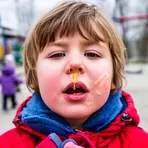
Having a runny nose with snot on the face

Having a blocked or runny nose and making soft sniffing sounds
Antonyms

Surface Forms
Morphology
Etymology
Snuffling comes from the simple sound word snuffle, related to sniff ('to breathe in through the nose'), and it copies the soft, repeated breathing we make when our nose is blocked. So a snuffling person or animal keeps making small sniffing sounds.