
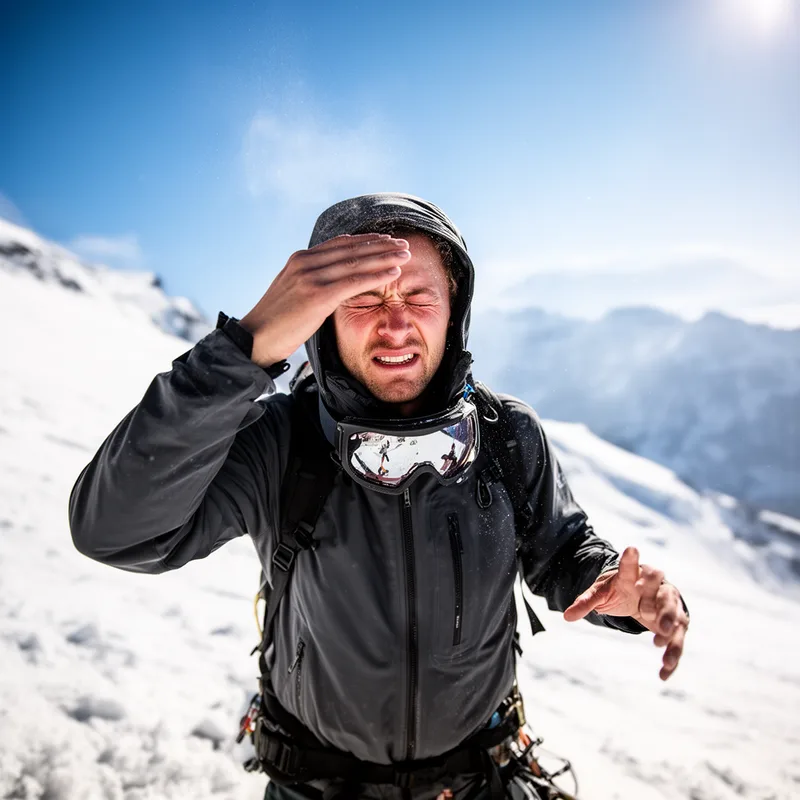
snowblindness
- noun
- /ˈsnoʊˌblaɪndnəs/
- UK
- The answer: snowblindness, caused by all that reflected light.
Examples
-
The team was warned about the risks of snowblindness due to high reflectivity on the snowy slopes, advising them to wear protective goggles.
-
Maybe it's that or snowblindness, but I can sense no surprise.
Fiction book (1998) -
I have suffered much from snowblindness.
Fiction book (1999) -
Of course, a UV coating of some sort is definitely a good thing; arc eye/snowblindness is not fun.
Blog text (30) -
After spending too long in the snow without sunglasses, he experienced snowblindness, making it difficult for him to see clearly.
-
Hiking on the glacier, she had to take frequent breaks because of snowblindness, which blurred her vision from the bright sunlight reflecting off the ice.
Synonyms


 1
8.1
1
8.1
Temporary loss of sight from sunlight reflected off snow
How Severe

Surface Forms
Morphology
Etymology
Snowblindness is made from the simple parts snow, blind, and -ness, so it literally means 'the state of being blind because of snow'. That's why it describes the temporary loss of sight when bright sunlight reflects off snow or ice and makes it hard to see.