

snow-blinded
- adjective
- UK
- After hours of skiing without goggles, he became snow-blinded and had to rest indoors.
Examples
-
The team struggled across the glacier, several members snow-blinded by the intense sunlight.
-
He was snow-blinded by the bright sunlight reflecting off the snow.
-
Climbers are warned to protect their eyes to avoid becoming snow-blinded during the ascent.
-
I felt snow-blinded after skiing all day.
-
Climbers are warned to protect their eyes to avoid becoming snow-blinded during the ascent.
-
After hours of skiing without goggles, he became snow-blinded and had to rest indoors.
-
He was snow-blinded by the bright sunlight reflecting off the snow.
Synonyms
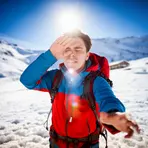
Unable to see for a short time because bright light from snow bounces into your eyes
Antonyms
How Blind

Surface Forms
Morphology
Etymology
The word snow-blinded is simply snow + blind, a clear picture: bright snow can make your eyes 'blind' for a short time. So, it means being 'unable to see temporarily' because bright light from snow or ice hurts your eyes.

