

to snore
 88
1.0
88
1.0

- verb
- /snɔr/
- He started to snore loudly once he fell asleep on the couch.
Loading YouTube…
Watch on YouTubeThey do like snoring, but she doesn't snore that often.
- They do like snoring, but she doesn't snore that often.
- And you will see very clearly if you are snoring or not.
- And so, you know, nobody would make anything of him, you know, nodding off, occasionally snoring very lightly.
- So most people who snore don't have sleep apnea, but most people with sleep apnea snore, if that makes sense.
- At one point, my dad slept in a room with me and my brother, OK, because he snored.
- I was never really diagnosed with it, but my wife would certainly tell you I I used to snore a lot.
- Yes, we're having trouble falling asleep in the same bed because she snores and I bang porn stars.
- And don't give a damn if you won't snore, nigga.
- I've been snoring drain the wall day.
Examples
-
I no longer snore and I feel well rested every morning when I wake up, so I no longer have sleep problems.
-
As I remember, when you lie flat on your back, you snore.
-
So you lie awake in the dark and listen to him snore and get ideas.
-
And then I love that you just start snoring in the middle of his story.
-
His father was still sleeping, and worse still, snoring like a bull.
Fiction book (1991) -
By the time the train was moving again, the man was asleep and snoring quietly.
Fiction book (1992) -
I came to bed to find you snoring away, one boot on and one boot off.
Fiction book (1993) -
You've been snoring away happily for hours.
-
The monks would still be snoring away in their coffins up in the tower.
Fiction book (1993) -
"Most nights, Adrian went home, and Steven was already sound asleep and snoring gently.
Fiction book (1991)
Synonyms
 1
8.6
1
8.6
To make loud breathing noises while sleeping
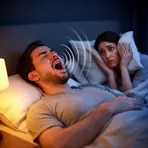
Make loud snoring noises while sleeping
Antonyms

How Loud

Surface Forms
Etymology
Snore (verb) comes from the old English snorian, which copied the sound of noisy breathing in sleep and became a word made from that sound. So to snore is to 'breathe loudly while sleeping'.