
snag
 1
8.9
1
8.9

- noun
- /snæɡ/
- Specialized
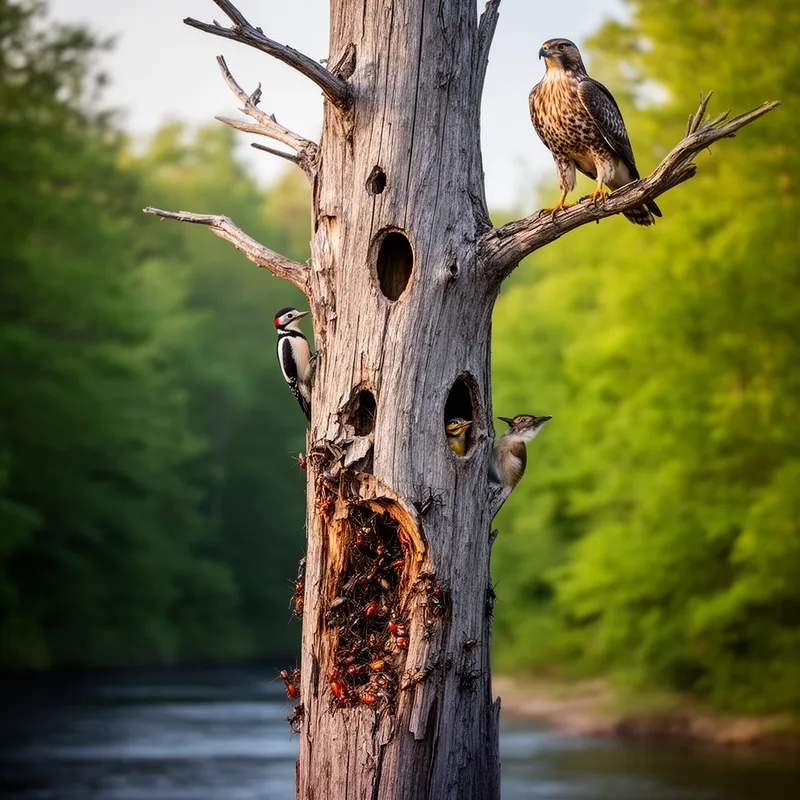
- In Estonia, a methodology was developed for biodiversity protection involving reserving key biotopes and leaving snags and dead wood.
- trees or snags
- dead snags
Examples
-
Many of these animals require mixed conifer forest, old growth logs, snags, and down wood to protect their livelihood.
Blog text (18) -
When I raised my binoculars to a snag, or jagged top, of a broken, burned-out tree, I found myself locked in a gaze with a female on her nest.
Academic text (2003) -
The sad thing is these snags are valuable wildlife habitat potentials.
Blog text (8) -
Years of arduous tree-by-tree application of herbicide by teams of laborers have created a forest of dead snags.
Academic text (2009) -
I swirled up over the treetops, spun around once in an eddy behind a tall snag, then bobbed along toward the mountaintop.
Fiction book (1999) -
Nonetheless, even harvesting on a cycle longer than 200 years, so that the trees reach the critical ages and sizes, would not produce the snags and fallen logs that are a key part of old-growth forests.
Academic text (1990) -
Twelve articles (9.4% of the total analyzed) mentioned or discussed the importance of structural habitat (e.g., snags for cavity nesting) for spotted owls.
Academic text (1994) -
The forest is home to many snags, which provide essential habitats for various wildlife species.
-
Birdwatchers often look for snags, as they attract species like woodpeckers and owls seeking shelter.
-
In our hike, we spotted a towering snag that had become a nesting site for local birds.
Synonyms
 1
3.5
1
3.5
A dead branch or piece of wood on a tree
Surface Forms
Etymology
Snag originally named a broken branch or stump, from an old Scandinavian word snag meaning 'sharp point'. That image of a dead tree sticking up is why people call a standing dead tree a 'snag'.