
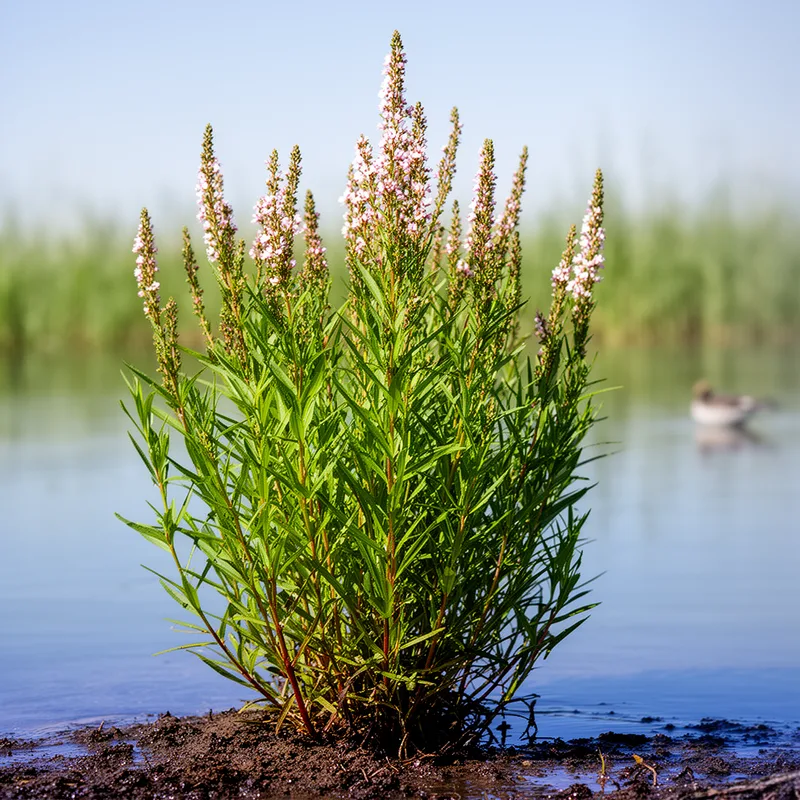
smartweed


 1
7.5
- noun
- /ˈsmɑrtˌwid/
- US
- In the water and wet edge of the island grew thick stands of smartweed, another prime duck food.
- smartweed and millet
- kinds of smartweed
- several smartweeds
Examples
-
"Does she have the makings of yellow?" I knew Mama had the peach leaves, goldenrod, butternut bark, smartweed, and hemlock to make yellow.
Fiction book (1994) -
Two kinds of arrowheads, dotted smartweed, lanceleaf primrose-willow, pickerelweed, and a tickseed are present in shallow depressions.
Academic text (2010) -
These relatives of smartweeds are so named because the short prickles on their stems are sharp enough to break the skin if stroked in the wrong direction.
Academic text (1998) -
Common plants include sweet flag, water plantain, purple avens, blue iris, marsh marigold, sundrops, water smartweed, and several kinds of white-flowered aster.
Academic text (1998) -
Also growing in and along the rivulets are blue iris, white bistort (a type of smartweed), hemlock parsley, a couple of species of buttercups, and monument plant.
Academic text (1998) -
Smartweed is a native plant ducks love, and the wildlife agency had encouraged the club owner to grow smartweed on his property.
-
Smartweed, an aquatic plant that's prime duck forage, grew in abundance in the shallows.
Synonyms
 1
9.9
A group of flowering plants commonly called smartweeds
Surface Forms
Morphology
smartweed = smart + weed (semi-transparent) = smart + weed
The components 'smart' + 'weed' are identifiable, but the specific sense of 'smart' here (a characteristic of the plant, historically 'causing a smart/stinging sensation') is not obvious to all learners, so the compound is not fully transparent.
Etymology
Smartweed likely comes from an older meaning of smart that meant 'to sting' or 'to hurt', because the plant often has a sharp, peppery taste or can make the skin feel sore. So, think of smartweed as the 'stingy' or spicy weed you find near ponds and fields.