
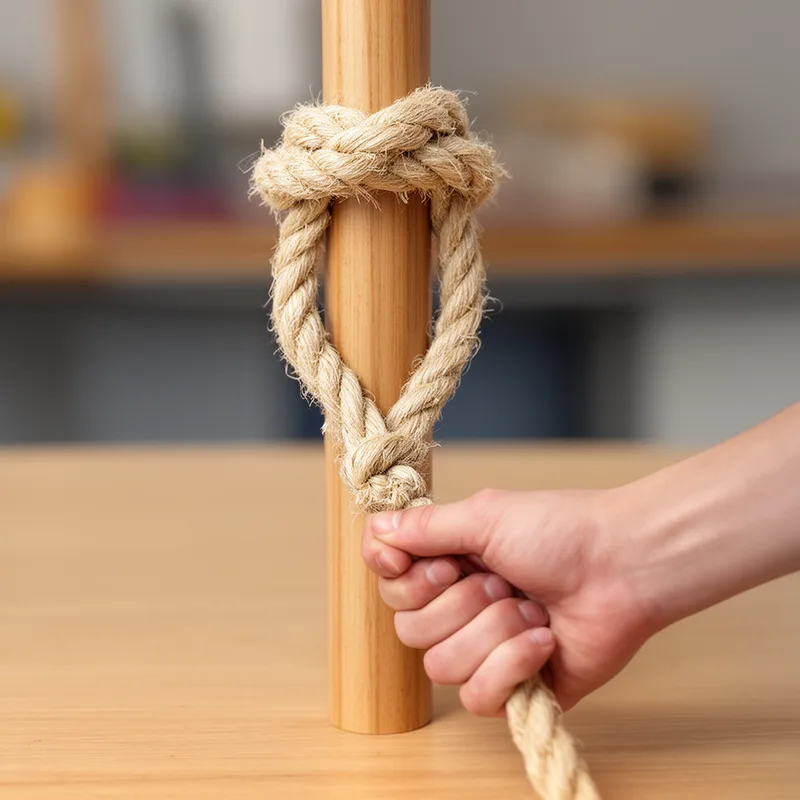
slip noose


 1
8.7
1
8.7
- noun
- /slɪp nuːs/
- Specialized
- He explained how a slip noose can tighten around an object when pulled, making it very useful for trapping.
Examples
-
The fisherman used a slip noose to catch the large fish he spotted near the shore.
-
I can run home and get you this nylon slip noose I made.
-
A slip noose is best for possums.
Fiction book (2001) -
To secure the tent properly, they created a slip noose that would hold tight against the wind.
Synonyms
 65
6.1
65
6.1
A loop of rope with a knot that tightens used to catch animals or for hanging
 3
9.9
3
9.9
A small tight loop of rope used to attach its end to a post
 3
5.5
3
5.5
A knot you can easily undo by pulling one end

A loop in a rope that tightens when you pull it
Surface Forms
Morphology
Both constituents contribute transparently: 'noose' denotes a looped rope and 'slip' conveys sliding/tightening action, so 'slip noose' straightforwardly describes a noose with a slipknot that tightens when pulled. This follows normal English modifier + noun composition and is predictable to a B1 learner who knows the two words.
Etymology
Slip noose comes from a simple rope image: slip shows the loop can slide and noose means a loop that holds something. When you pull the rope the loop 'tightens', so it was used to catch or hold things and now means 'a loop that tightens when pulled'.