
slash
 3
8.8
3
8.8

- noun
- /slæʃ/
- Specialized
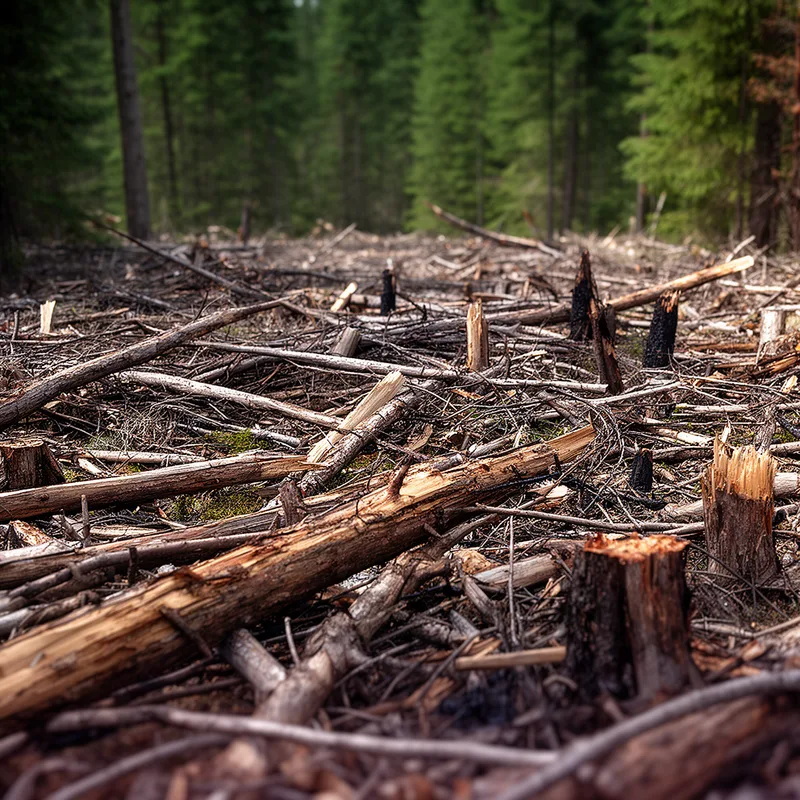
- The sawmill lay beyond a slash of pines.
- slash-and-burn
- slash-and-burn agriculture
- slash-and-burn method
Examples
-
Be careful when walking through the forest; there is a lot of slash on the ground from recent logging.
-
Mesoamericans also cultivated raised fields in wetlands, terraced sloped lands, and practiced slash-and-burn shifting cultivation on forested lands.
Academic text (1995) -
Some Mikea grow maize and cassava using slash-and-burn methods.
Academic text (1991) -
Furthermore, all logging, even at usual SFM-mandated harvest intensities, leaves behind large amounts of slash.
Academic text (2012) -
Today, locals regularly employ slash-and-burn agriculture, a technique introduced by Spanish colonizers in the 1600s.
Academic text (2008) -
During the summer dry seasons of the late 1970s, a smoky haze enveloped Xinguara from the slash-and-burn fires in surrounding forests.
Academic text (1990) -
After the fire swept through the area, the landscape was filled with slash from the fallen trees.
-
The wildlife struggled to navigate through the thick slash left behind by the storm.
Compounds

Surface Forms
Etymology
Slash for the pile of branches and debris comes from the action of cutting trees and brush. After logging or fire, the broken wood left behind was called 'slash' because it is the result of slashing the forest.