

skipjack tuna
- noun
- /ˈskɪpˌdʒæk ˈtuːnə/
- In warm ocean waters, schools of skipjack tuna can often be seen swimming together.
- skipjack tuna fishery
- skipjack tuna catch
- large skipjack tuna
Examples
-
The Hawaii skipjack tuna fishery originally supplied only the local market for fresh and dried tuna.
Academic text (1993) -
For local consumers, the loss of the aku (skipjack tuna) fleet has produced higher retail prices for fresh tuna.
Academic text (1993) -
Skipjack tuna are located by searching for bird flocks associated with surface schools.
Academic text (1993) -
Skipjack tuna was the dominant species in the catch at 100,900 t, or 80% of the total.
Academic text (1997) -
From 1937 until the early 1980s, most of the skipjack tuna landed in Hawaii was canned.
Academic text (1993) -
Attempts to increase profits by selling more high-priced, fresh skipjack tuna faced market limitations even before the cannery closed.
Academic text (1993) -
The western Pacific fishery, however, is dominated by skipjack tuna catches, whereas the other fisheries are dominated by yellowfin tuna catches.
Academic text (1997) -
The rate for yellowfin tuna was 3.4 t/day fished, and for skipjack tuna, 12.9 t/day fished.
Academic text (1997) -
Catches reached record lows for yellowfin tuna, Thunnus albacares, and skipjack tuna, Katsuwonus pelamis, and continued a declining trend that started in 1995.
Academic text (1997) -
Hawaii longline vessels evolved from the wooden sampan-style baitboats used in the pole-and-line fishery for skipjack tuna (June 1950).
Academic text (1993)
Synonyms
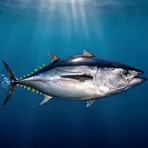
 213
1.0
213
1.0

A large, fast sea fish often eaten fresh or canned
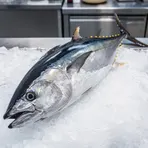 24
1.0
24
1.0
A large sea fish that people often eat fresh, grilled or canned
 1
7.1
1
7.1
A small tuna-like fish found in warm seas and used for food

A fish called skipjack tuna whose dried flakes are used in Japanese cooking
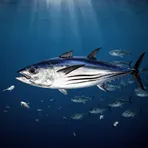
A tuna fish that lives in the open ocean, often called skipjack tuna
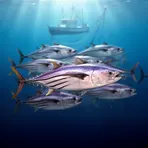
A group of ocean fish that includes the skipjack tuna
Surface Forms
Morphology
This is a compositional compound: 'skipjack' names a particular kind/species and 'tuna' names the fish family, so together they denote a subtype of tuna. The meaning is directly derivable from the parts and follows common cross-linguistic species-naming patterns, so a B1 learner who knows both constituents would understand it.
Etymology
Skipjack tuna may come from the fish's habit of skipping across the water and the old fishing word jack for a 'small fish'. So, the name describes a small, fast tuna that often jumps and swims in large groups.