

sit-down
 2
6.4
2
6.4

- noun
- /ˈsɪtˌdaʊn/
- Archaic
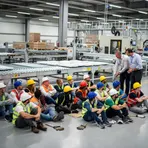
- The workers organized a sit-down strike to demand better wages and safer working conditions.
- sit-down strike
Examples
-
During the sit-down strike, employees occupied the factory and refused to leave until their demands were met.
-
Yes, it was a good old fashioned sit-down strike.
-
Should Wal-Mart workers stage a sit-down strike?
Blog text (27) -
Rollo decided to engage in a sit-down strike in front of the 79th Street entrance on Fifth Avenue.
Blog text (33) -
The thirty-seven women who occupied the Virginia offices of the Pittston Coal Company for two days, in a sit-down protest which galvanized the 1989-90 strike, called upon this legacy.
Academic text (1992) -
17 March 1990: Thousands of university students expressed opposition to the National Assembly's attempt to expand its authority by staging a sit-down protest at the Chiang Kai-shek Memorial Hall Plaza.
Academic text (1992) -
Many famous labor movements began with a sit-down strike to challenge unfair treatment by management.
Synonyms
 16
4.9
16
4.9
A protest where people sit in a place and refuse to leave
 9
4.2
9
4.2
A time when workers stop working to protest about pay or conditions
 3
4.4
3
4.4
Workers stay at their workplace and refuse to work until demands are met
 1
5.7
1
5.7
Temporary work protest by workers to demand better pay or conditions
How Disruptive
1
4.6
 16
4.9
16
4.9
- Archaic
2
6.4
384
3.8
272
3.2
- Formal
61
3.5
Surface Forms
Morphology
sit-down = sit (semi-transparent) = down + sit
The components 'sit' and 'down' signal a related action, but the specialized labour-action meaning 'occupy the workplace and refuse to leave' is an institutionalized extension not directly inferable from the basic verbs for many learners. [Postprocessing: moved 'down' from base_words to prefix]
Etymology
Sit-down comes from the two simple words sit and down, because in this kind of strike workers would literally 'sit' 'down' inside their workplace and refuse to leave to stop work. So a sit-down strike is when people stay inside a factory or shop to force talks or change.