
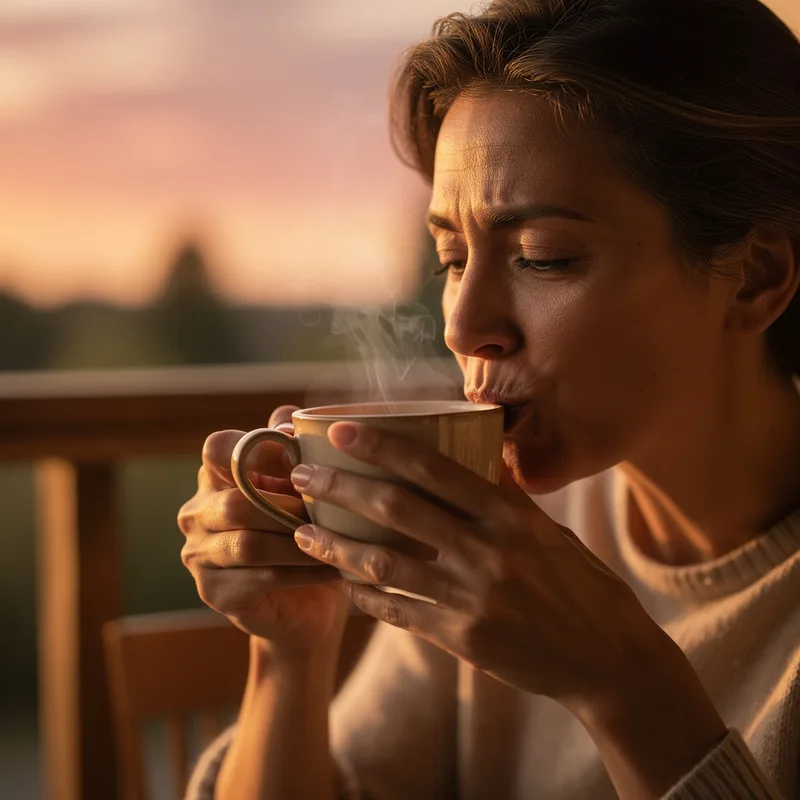
to sip tea
 2
2.8
2
2.8

- phrasal verb
- After dinner, they sip tea from blue mugs and watch the sun recede from the uncurtained window.
- sat sipping tea
- sipping tea and nibbling
- sipping tea and talking
Examples
-
Yet we can sip tea and read the newspaper, half-listen to our mate's breakfast conversation, and keep breathing.
Fiction book (2002) -
For a long while, Eleanor and Mr. Walker sat by their fire, sipping tea and talking like friends met on a snowy night.
Fiction book (1999) -
I love her, Mama, he told her one night after dinner while they sipped tea on the porch swing.
Fiction book (1995) -
Helen sits sipping tea, deep in thought about her concern for Adam.
Fiction book (1999) -
One morning, Deva and her mother were sipping tea in the Great Hall.
Fiction book (1997) -
Madame Gemelia Rockstone was sitting on a couch in the corner, sipping tea.
Fiction book (2000) -
The girls had settled down now to sip tea, nibble on little iced cakes, and talk about the Meschianza.
Fiction book (1994) -
Pavel Nemec was back in his chair, casually sipping tea.
Fiction book (1995) -
The schoolteacher was invited to a board meeting, where she sipped tea with self-consciously solicitous ladies with high bosoms and long sleeves.
Fiction book (1995) -
As the rain fell gently outside, I enjoyed the moment, taking a moment to sip tea and reflect on my day.
Synonyms


Antonyms


How Slowly
2
2.8
 26
2.9
26
2.9
Surface Forms
Morphology
The literal meanings of 'sip' (to drink slowly) and 'tea' (a beverage) do not by themselves convey the social-media/gossip sense; the MWE is a culturally specific metaphor (quietly drinking tea while observing drama). Because there is a clear metaphorical link to the constituents but the gossip/observe meaning is not reliably predictable without exposure, this is best classified as semi-transparent.
Etymology
The verb sip tea comes from the quiet, small drinks people take to enjoy hot tea; imagine holding a warm cup and taking tiny sips to taste it. So, sip tea means 'to drink tea slowly and enjoy it'.