
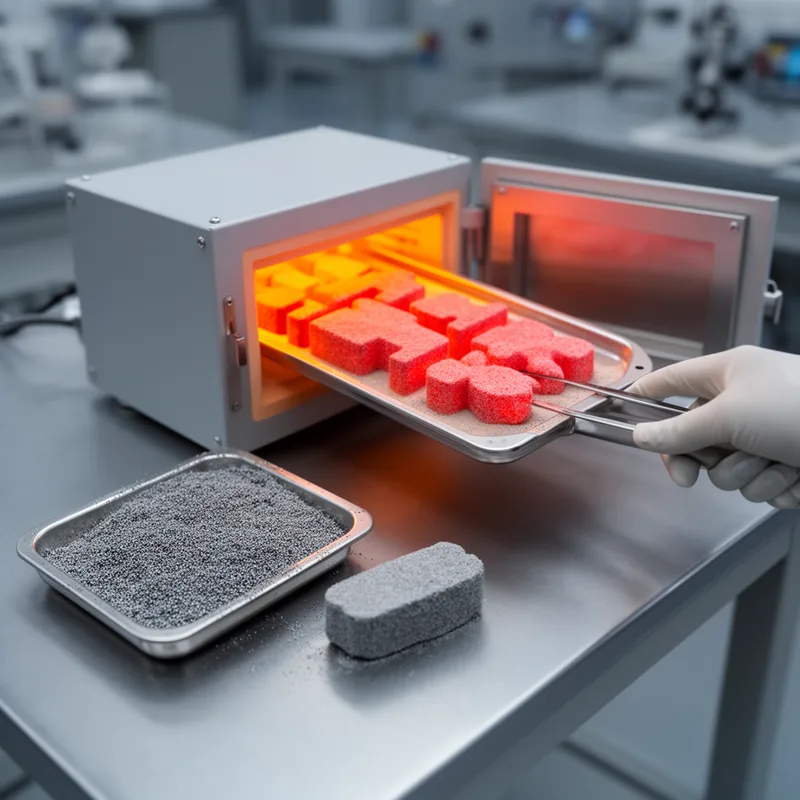
to sinter


 1
9.9
1
9.9
- verb
- /ˈsɪntər/
- Specialized
- The powder is mixed with a polymer binder and then sintered to make the finished components.
- sintered materials
Examples
-
The furnace temperature is then raised to lightly sinter the steel particles together.
Academic text (1995) -
To create strong components, manufacturers often sinter powdered metal at high temperatures.
-
However, with MIM, operators must eliminate the binder and sinter the metal powder together.
Academic text (2002) -
Bauman said they can compete with parts produced by other rapid prototyping systems that melt or sinter thermoplastics.
Academic text (2007) -
High-energy, high-temperature, sintered rare-earth magnets are used, making it suitable for applications where demanding temperatures are found.
Academic text (2004) -
The metal particles will sinter together when heated in the furnace without melting.
-
The technician needs to sinter the metal powder for several hours to ensure durability.
How Fused

Surface Forms
Etymology
Sinter comes from an old German word sinter that meant a hot 'cinder' or a 'deposit' left by heat. Think of powdered metal or ceramic being heated until the tiny pieces stick together without fully melting, so to sinter is to make a solid mass by heating powder just enough to join it.