

singular
 1
3.5
1
3.5

- noun
- /ˈsɪŋɡjələr/
- Specialized
- The first person singular of the present indicative of 'ver' exhibits in both Modern and Old Spanish a great morphological similarity with the first person singulars of two other very common verbs, namely, 'creer' and 'leer.'
- singular and plural
- first person singular
- person singular
Loading YouTube…
Watch on YouTubeWhich, yes, a sea butterfly has feet or foot singular.
- Which, yes, a sea butterfly has feet or foot singular.
- As such, the term there is actually the singular.
Examples
-
So if we wanted to say the squirrels, if for some reason there was more than one squirrel, we would just say that it's not singular, it's plural.
-
INSULA in the singular, AE in the plural.
-
My favorite thing in like maybe the world is getting together with smart or interesting people and being involved in one singular conversation.
-
So I'd say a great beginning, a great ending, and at least one singular memorable character.
-
When you start using those first singular pronouns, I, me and my, then we isolate people.
-
Larva is singular, Larvae is plural.
-
An important waganga, the singular of waganga, Salum Mhunzi, adopted me as his daughter.
Academic text (2001) -
Beausoleil, Claude. Life in the Singular. Selected Poems: 1993-1999. Toronto: Guernica Editions, Inc., 2004. 116 pp. $10.00 paper.
Academic text (2004) -
Singulars and plurals: datum, data; schema, schemas; appendix, appendixes; matrix, matrices.
Academic text (2002) -
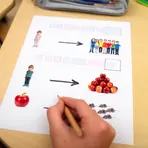
When discussing grammar, we need to remember that 'singular' nouns refer to one person or thing.
Synonyms

The form of a word used for one person or thing
Antonyms

Compounds


Surface Forms
Etymology
Singular as a noun names the form used for 'one' and comes from Latin, like the common word single. So the singular form of a noun is the form you use when you mean one person or one thing.