
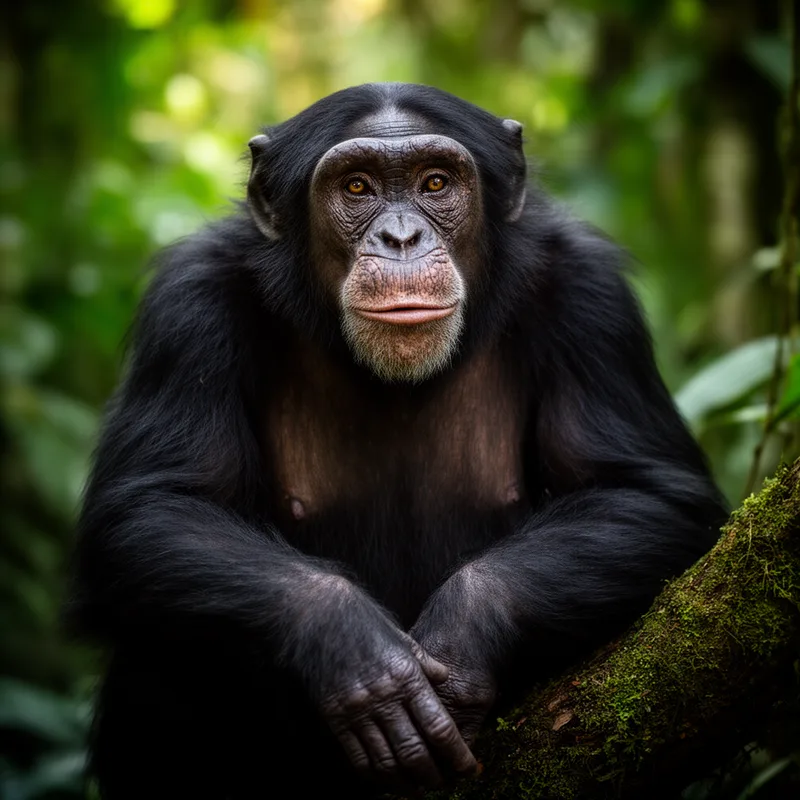
simian
 9
8.5
9
8.5

- noun
- /ˈsɪmiən/
- One is for humans and one is for simians.
- simian virus
- simian immunodeficiency
Loading YouTube…
Watch on YouTubeThe reason why we're successful over other simians is that we have this capacity to feel empathy for each other, to cooperate with each other.
- The reason why we're successful over other simians is that we have this capacity to feel empathy for each other, to cooperate with each other.
Examples
-
By the mid-1980s, researchers had identified a similar virus in captive laboratory primates: simian immunodeficiency virus (SIV).
Academic text (2004) -
At the moment, your two simian friends and sponsors are free on bail.
-
Luckily for us, none of the simians knew how to swim.
Blog text (20) -
We were about a half mile ahead of them when several of the simians spotted us in a clearing.
Blog text (20) -
The monkeys that live in the forests of West Africa have long been infected by a virus called the simian influenza.
-
The reason why we're successful over other simians is that we have this capacity to feel empathy for each other, to cooperate with each other.
-
The researchers studied the behavior of a group of simians in their natural habitat.
-
While visiting the zoo, the children were amazed by the playful antics of the simians.
-
The documentary provided fascinating insights into the social structures of different simian species.
Synonyms
 65
4.0
65
4.0
A mammal like a monkey, ape, or human
Surface Forms
Etymology
Simian comes from the Latin word simia, which means 'ape' or 'monkey', so a simian is an ape or a monkey.