
silviculturally
- adverb
- /ˌsɪl.vɪˈkʌl.tʃər.ə.li/
- Specialized
- These forests give a range of values that can be compared with trees growing in logged forests and silviculturally treated forests (Primack et al. 1985, 1987a, b, c, 1989, Tan et al. 1987).
Examples
-
Are the treatments silviculturally feasible (and also fiscally and socially), and will they work within the requirements of a given forest plan? (3)
Academic text (2016) -
How does our idea of desired future conditions (DFCs) change with each treatment type, and is this important silviculturally? (4)
Academic text (2016) -
The forest management plan focuses on practices that are sustainable and silviculturally sound.
-
To improve biodiversity, the area should be silviculturally managed to promote native tree species.
-
The workshop covered various techniques that are essential for silviculturally beneficial practices.
Surface Forms
Morphology
silviculturally = silvicultural (transparent) = silviculture + al + ly
Formed by standard adjective and adverb suffixation (silviculture -> silvicultural -> silviculturally), so the adverbial meaning is directly predictable from the base.
Etymology
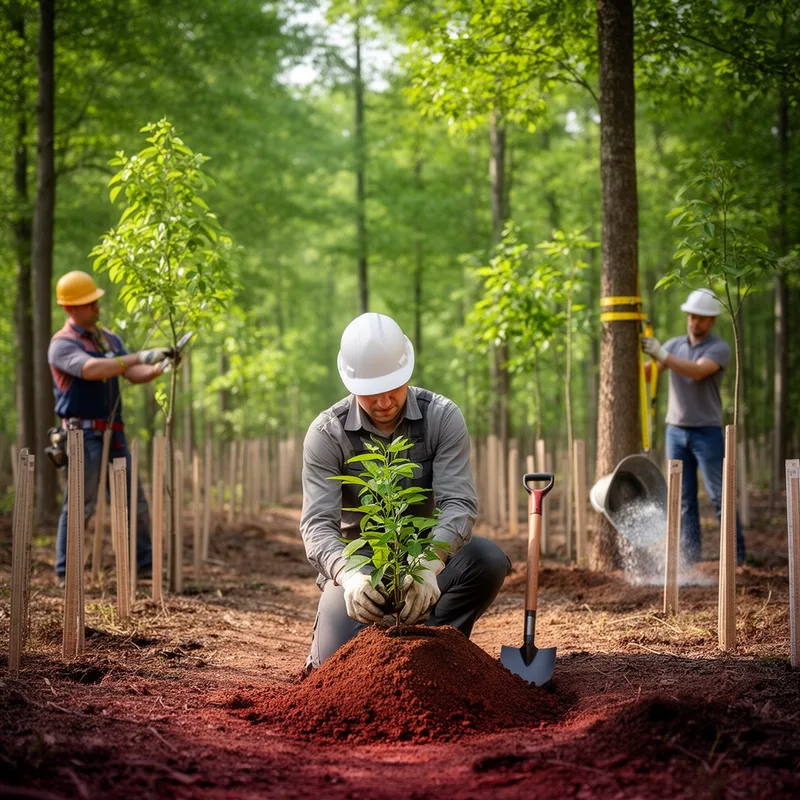
Silviculturally comes from the Latin parts silva 'forest' and cultura 'cultivation', a root you also see in agriculture. So, to act silviculturally is to do something in a way that grows, cares for, or manages forests.

