
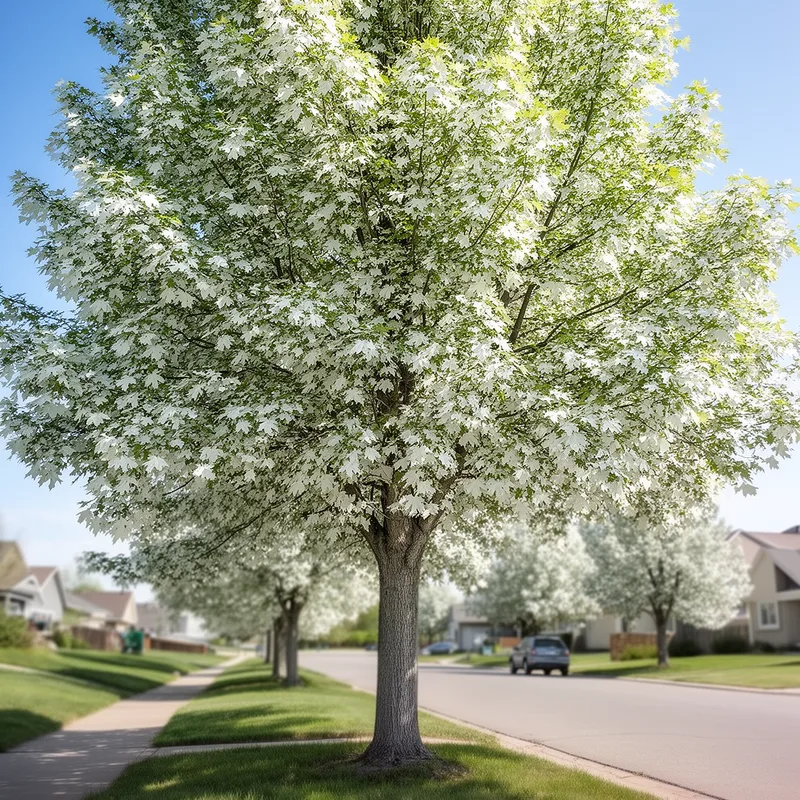
silver maple


 1
5.1
1
5.1
- noun
- /ˈsɪlvər ˈmeɪpəl/
- US
- In addition to the oak species and silver maple, hackberry was important for five of the transient migrants and for the suite of wood warbler species.
- silver maples and cottonwoods
- silver maple and oaks
Examples
-
Silver maple saplings, hundreds of them, Olivia sees as they drive closer.
Fiction book (1996) -
From the bedroom window, he could see a tall silver maple, its leaves now pale yellow.
Fiction book (1990) -
The leaves on the silver maple sat motionless and green outside the window when David woke.
Fiction book (1990) -
Mack aimed carefully and plucked the stone off the trunk of the silver maple.
Fiction book (1990) -
For example, we often observed Baltimore Orioles foraging in large clusters of silver maple seeds during warm springs.
Academic text (2016) -
Species that breed locally preferred silver maple (Acer saccharinum), which is dominant in this forest.
Academic text (2016) -
In spring, the silver maple produces sap that can be harvested for syrup.
-
The silver maple grew tall and sturdy, providing ample shade on a hot summer day.
-
Walking through the park, we admired the silver maple's distinctive light green leaves with their white undersides.
Synonyms
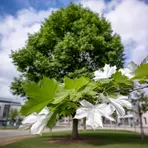
A North American maple tree with five-lobed leaves green above and silvery white below
Surface Forms
Morphology
The phrase is a straightforward adjective + noun composition: 'silver' describes a quality of a 'maple', so the meaning (a maple with silvery characteristics) is directly derivable from the parts. This literal, descriptive pattern is cross-linguistically common and follows standard English noun modification, so a B1 learner who knows both words will readily infer the meaning.
Etymology
Silver maple is named for the light, shiny color under its leaves: silver describes the pale, bright underside and maple is the type of tree. This clear picture of silvery leaf backs helps people remember the name and use silver maple today for the North American tree.