
silver bromide
- noun
- /ˈsɪlvər ˈbroʊmaɪd/
- Specialized
- The silver bromide coated paper turned dark after being exposed to sunlight.
Examples
-
When one sees silver bromide prints made in 1922, it is realized that Edward Weston was a true photographic pioneer.
Academic text (2000) -
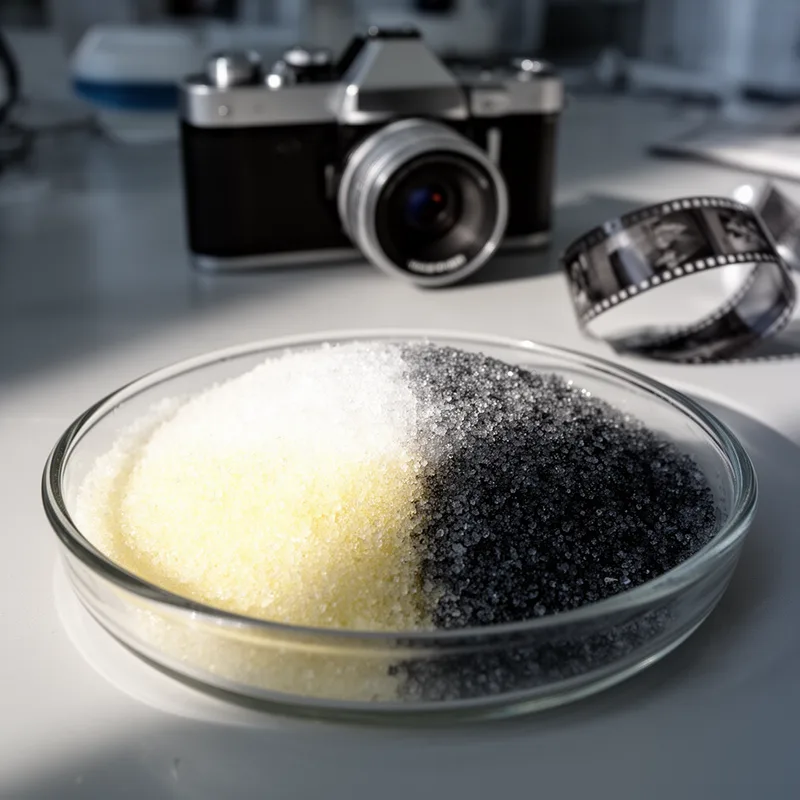
Crystals of silver bromide in a dry gelatin base.
Fiction book (1993) -
Photographers often use silver bromide in the production of black and white film emulsions.
-
Many artists appreciate the vintage quality of photographs developed using silver bromide processes.
Surface Forms
Morphology
The term is a straightforward chemical compound name formed by combining 'silver' and 'bromide', so a learner who knows both constituents can infer it is a silver salt containing bromide (AgBr). Chemical naming of this type is cross-linguistically regular, making the basic referent transparent to B1 learners even if some specific uses (e.g., photographic emulsions) require extra knowledge.
Etymology
Silver bromide is a literal name for a chemical made of silver and bromide that darkens when light hits it. Because those tiny crystals change color with light, early photographers used them to 'capture' pictures, so the name is linked to its use in making photographs.

