
to silt
 1
5.6
1
5.6

- verb
- /sɪlt/
- Deforestation has raised the stream temperature and silted the beds.
Examples
-
As rivers slow, they drop their sand, and harbors silt up and deltas spread.
Academic text (1998) -
Depending on your choice of metaphor, the old channels are silting over or becoming very snowy.
Academic text (1997) -
After about six generations, sea levels fell, and the surrounding swamps silted up.
Academic text (2006) -
This aggravated the fundamental problem because the river silted up and rose while the surrounding land subsided.
Academic text (2006) -
The port of Paestum in southern Italy silted up completely, and the town declined, while Ravenna lost its access to the sea.
Academic text (1990) -
As a consequence, some wetlands are silting up into muddy pools.
Academic text (2007) -
The Oostercnd fishermen joined forces in an attempt to maintain their harbor, which had silted up in the 1850s.
Academic text (1996) -
Farmers and ranchers are cutting and burning trees, degrading watersheds, and allowing rivers and dams to silt up.
Academic text (1994) -
Mountainous as it is, Arcadia does have some valleys silted up with alluvial soil.
Academic text (1998) -
The heavy rainfall caused the river to silt up, making navigation impossible for boats.
Synonyms


 1
6.9
1
6.9
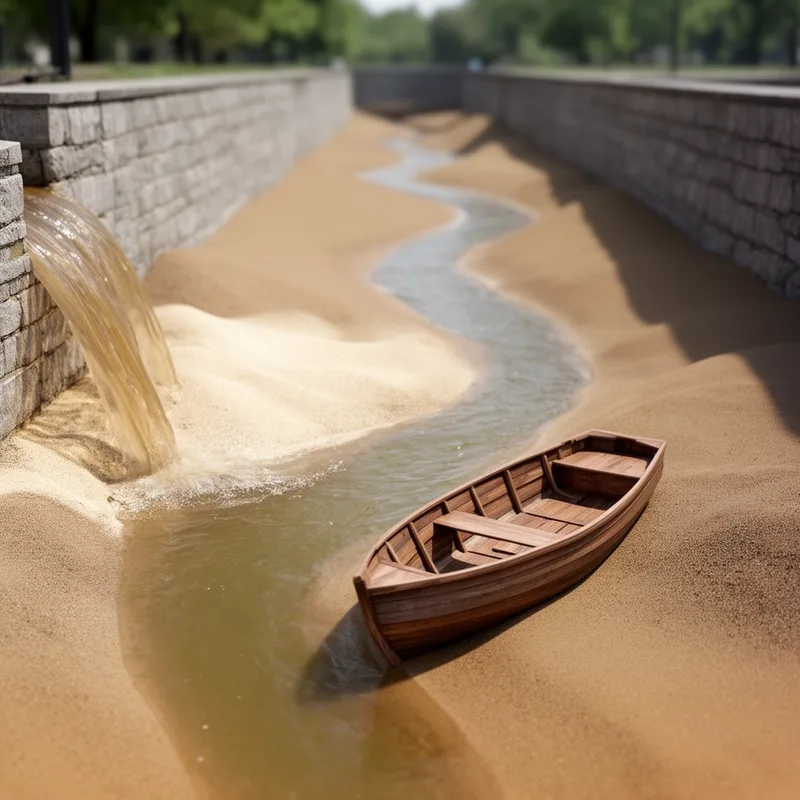
To become filled with mud and sand so boats cannot pass in a river or harbor
 1
7.0
1
7.0
To make small bits sink and collect at the bottom of a liquid
Antonyms

Phrasal Verbs
How Blocked

Surface Forms
Etymology
The verb silt comes from the same old river word and means to become full of that fine 'mud' and 'sand' or to make a place full of it. That's why a channel or harbor can 'silt' and become blocked as this material slowly builds up.