
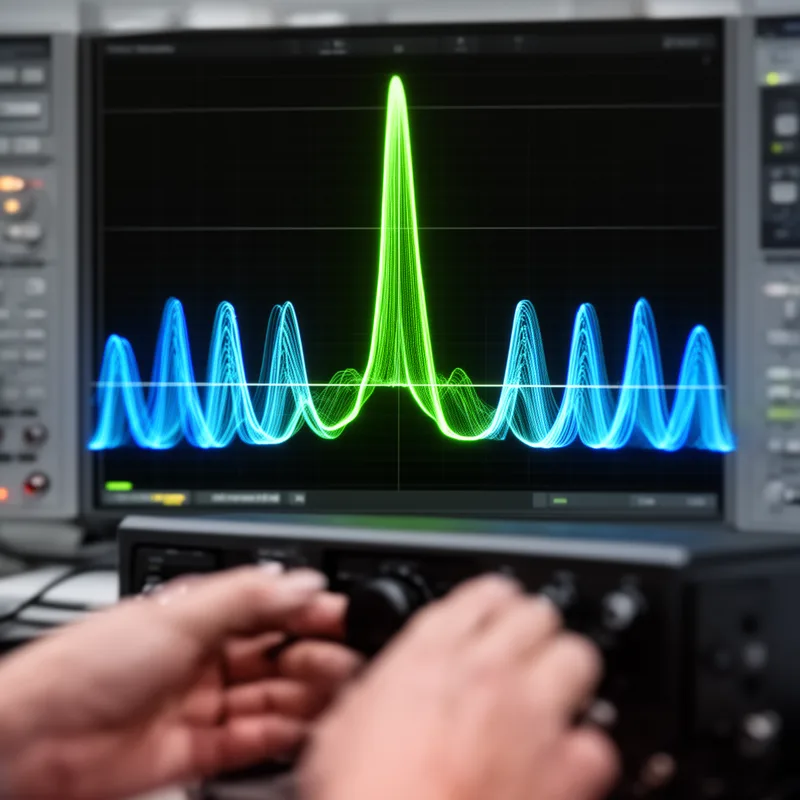
sideband


 1
7.7
- noun
- /ˈsaɪdˌbænd/
- Specialized
- The video carrier is amplitude modulated by the video signal, a process that produces sidebands on either side of the carrier frequency.
- lower sideband
Examples
-
I've got an auxiliary sideband channel here.
Fiction book (1997) -
The 4 MHz cutoff of the upper sideband is necessary to leave room for the audio signal, but it significantly limits the horizontal resolution of broadcast TV images.
Academic text (1999) -
But what can you tell through a sideband radio?
Fiction book (1997) -
We bring him dry goods and gasoline that he uses to run a generator for his sideband radio.
Fiction book (1997) -
The extended frequency range and increased scan rate of the new Model 3290 make it useful for narrowband, wideband, FM, AM, and single sideband signal measurements.
Academic text (2006) -
The audio carrier, located 4.5 MHz above the video carrier, is frequency modulated by the audio signal and transmitted with both of its sidebands intact.
Academic text (1999) -
The technician explained that the sideband frequencies are essential for clear radio transmission.
-
In amateur radio, operators often use sideband to communicate over long distances.
-
When tuning the radio, you can adjust the dial to find the correct sideband frequency.
Synonyms
 56
4.8
A range of radio waves used for signals
 3
4.2
A range of radio waves used for one purpose, like TV or radio
 1
7.0
A range of radio waves used to send signals like TV or radio
Surface Forms
Morphology
Etymology
Sideband comes from side ('at the side') and band ('a range' or 'strip'). It means the range of radio frequencies that sit like side lanes next to the main radio signal, so they are the signals 'on the side' of the main wave.