
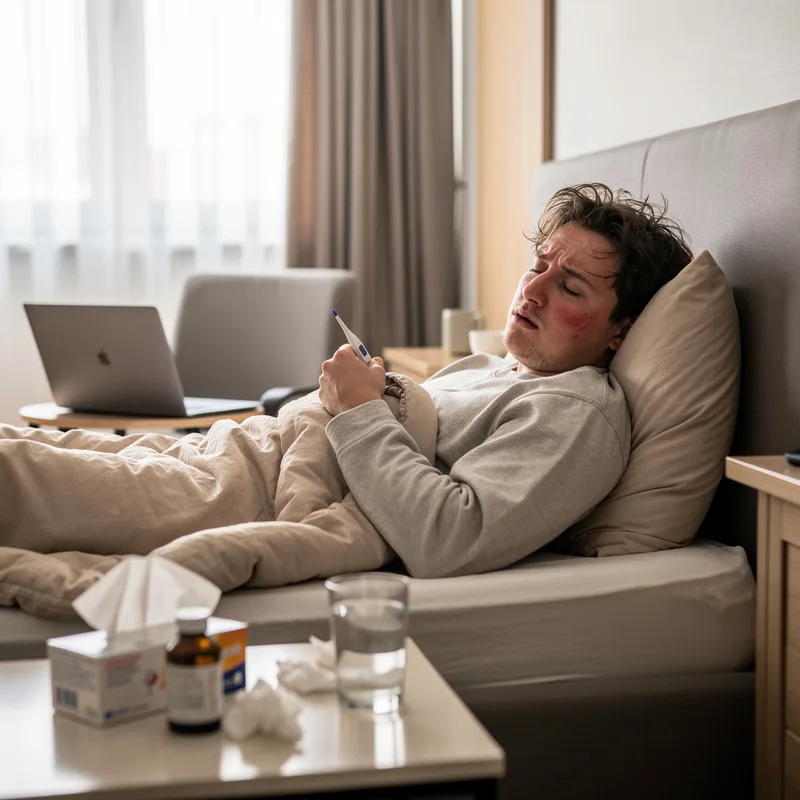
sick leave
 14
2.4
14
2.4

- noun
- /sɪk liːv/
- No, actually I've been on sick leave for much of the last two years.
- paid sick leave
- take sick leave
- sick leave at work
Loading YouTube…
Watch on YouTubeYou have a small uprising, see a small uprising, for example, and half the present staff are on sick leave because of the nerves.
- You have a small uprising, see a small uprising, for example, and half the present staff are on sick leave because of the nerves.
- They negotiated for time off, for holidays, for weekends, for various kinds of vacation pay and sick leave pay.
- A friend who owns a big record company here in Los Angeles said that they require one in person day per week and less on sick leave.
Examples
-
After catching the flu, she submitted her request for sick leave to her manager.
-
Finally, after a long sick leave, he returned to city hall, hobbling on crutches.
Fiction book (2000) -
I need to take another sick leave.
-
- I thought you were on sick leave.
-
Two guys are on sick leave.
-
I think perhaps you ought to take a bit of sick leave.
-
Jean had another week of sick leave from the college where she taught.
Fiction book (1999) -
I've been on sick leave.
-
60% of NHS workers took sick leave, averaging 20 days each.
Academic text (2015) -
You're on indefinite sick leave.
Synonyms
 443
3.8
443
3.8
Official permission to be absent from work or duty
 38
3.9
38
3.9
A period when someone is officially allowed to be away from work or school
Antonyms

How Long
2
3.6
 14
2.4
14
2.4
Surface Forms
Morphology
The meaning 'a period of absence from work because of illness' is directly and transparently composed from 'sick' (ill) + 'leave' (authorized absence). This noun + noun construction follows a common, cross-linguistic pattern for describing types of leave, so a B1 learner who knows both constituents will readily infer the MWE meaning.
Etymology
Sick leave comes from the idea that leave means permission to be away and sick means ill, so workers were allowed leave when they were sick. So, sick leave means 'time off work because of illness'.