
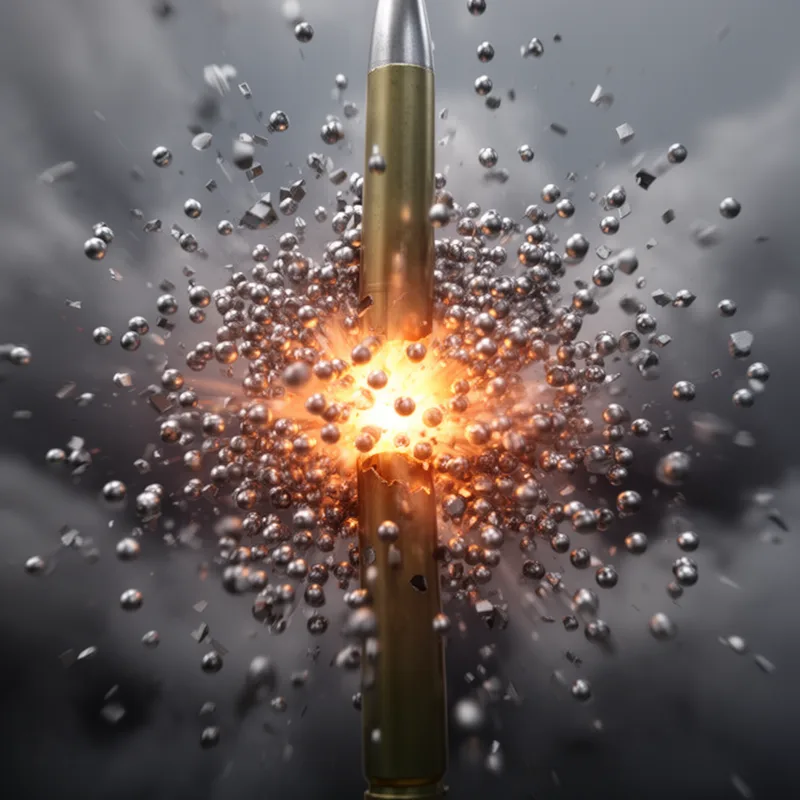
shrapnel
 32
8.8
32
8.8

- noun
- /ˈʃræp.nəl/
- Archaic
- Now, the battlefield around Verdun is still littered with unexploded shells, shrapnel pieces and bullet fragments.
Examples
-
Where the shrapnel entered the hull, water now spurts with every wave.
Fiction book (1998) -
Many injured soldiers take shrapnel in their eyes from improvised explosive devices.
Academic text (2011) -
Look out for falling shrapnel.
-
I was wounded in May '67 and sent to Japan to remove shrapnel from my legs.
Blog text (27) -
Shrapnel began bursting all around him.
-
The shrapnel barrage fell short of the enemy position, so the German machine gunners were free to fire.
Academic text (2010) -
Red-hot shrapnel sliced across the navigator's left arm and then into the engineer's right arm.
Fiction book (2000) -
In July 1915, Footnote Sorge was wounded by shrapnel in his right leg.
Fiction book (1996) -
You were wounded by shrapnel after a mortar hit your reconnaissance unit outside Algiers.
Fiction book (2000) -
During the battle, many soldiers were injured by shrapnel from exploding artillery shells.
Synonyms
 8
7.5
8
7.5
A metal object fired from a large gun that often has an explosive inside
Surface Forms
Etymology
Shrapnel comes from the name of a British officer, Henry Shrapnel, who invented a type of shell filled with small metal balls. When his shell burst in the air and 'scattered' those balls, people began to call that kind of shell a shrapnel, so it means a shell that 'explodes' and sends pieces over a wide area.