
shortgrass


 1
7.0
1
7.0
- noun
- /ˈʃɔrtˌɡræs/
- US
- To make the diorama absolutely accurate, native shortgrasses from the western prairies were specially harvested and installed to complete this restoration.
- shortgrass steppe
- shortgrass prairie
Examples
-
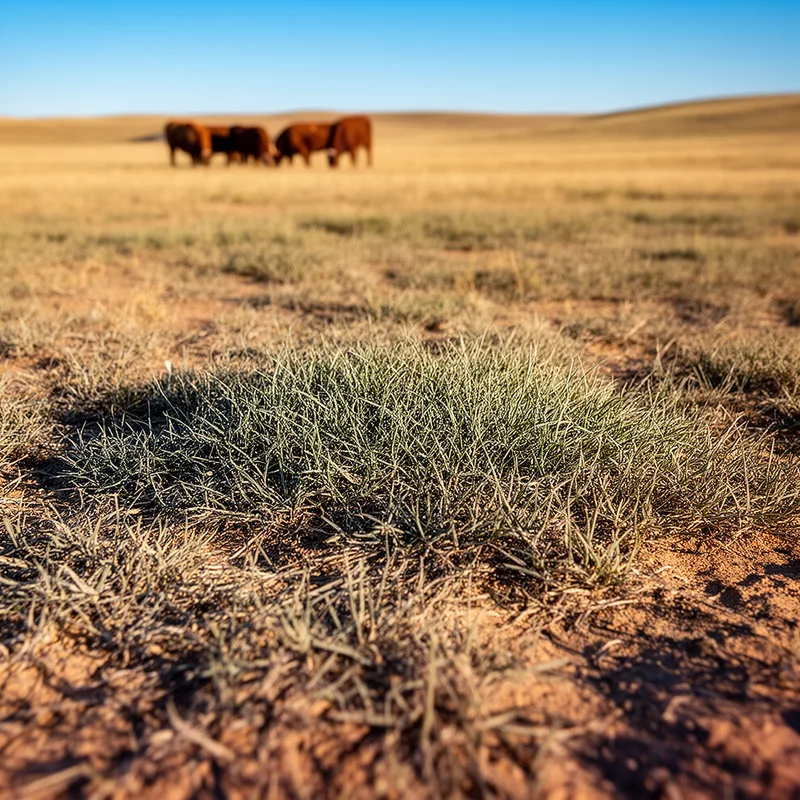
During the summer, the shortgrass landscape turns golden under the bright sun.
-
In the Great Plains, for instance, virtually all (99.9 percent) of the native tallgrass prairie and 30 percent of the shortgrass prairie have been converted to intensive crop production.
Academic text (1998) -
Golubiewski (2006) found marked stimulation of both C and N cycling in lawns relative to native shortgrass prairie in Colorado.
Academic text (2008) -
Right now, warm-season grasses like blue grama, Bouteloua gracilis, dominate the shortgrass prairie in Colorado.
Academic text (1997) -
Unlike mammoths and horses, bison needed the leaves and sheaths of grass for the higher protein content and tended to select shortgrass, utilizing the areas of mid- and tallgrass only for new growth, usually in spring.
Fiction book (1990) -
Having experience with highly diverse sites—including the prairie and the Shortgrass Steppe LTER of north-central Colorado—provides her with a radical contrast with the Dry Valleys.
Academic text (2008) -
The shortgrass prairie is home to many species of wildlife that thrive in dry conditions.
-
Farmers often rely on the shortgrass region for grazing their cattle due to its hardiness.
Synonyms
 1
6.9
1
6.9
Grass that stays short and survives with little rain on dry open plains
How Tall
1
4.8

- US
1
7.0
Surface Forms
Morphology
Etymology
Shortgrass is simply two English words put together: short ('not tall') and grass ('green plant'), so you can picture low plants close to the ground. So shortgrass means the kinds of grass that stay 'short' and can live on dry plains and open prairies.