
shikonin
- noun
- /ʃɪˈkoʊnɪn/
- Specialized
- Researchers have found that shikonin exhibits significant antibacterial properties against various pathogens.
- shikonin induced
- shikonin induced DNA DSBs
- shikonin induced glioma
Examples
-
Studies suggest that shikonin may reduce tumor growth in cancer models, making it a focus of ongoing research.
-
The lethal effect of shikonin on cancer cells was reported to be associated with RIP1 and RIP3. We thus examined shikonin-induced changes in the protein levels of RIP1 and RIP3 by using western blotting.
Academic text (2016) -
Additionally, shikonin could also cause DNA damage and inhibit DNA synthesis 17,18.
Academic text (2016) -
Moreover, the average weight of gliomas reduced significantly after 7 days of treatment with Shikonin (Fig. 5 C).
Academic text (2016) -
Similarly, shikonin induced a significant reduction in the viabilities of both SHG-44 and U251 cells.
Academic text (2016) -
After siRNA transfection overnight, the cells were incubated with shikonin at the indicated dose for subsequent experiments.
Academic text (2016) -
Shikonin is a natural ROS inducer in vitro and in vivo 36.
Academic text (2016) -
In this study, we found that shikonin upregulated the expression of -H2AX and phosphor-ATM in vitro and in vivo.
Academic text (2016) -
Moreover, the neutral comet assay demonstrated that glioma cells treated with shikonin had a longer comet tail with increased DNA content.
Academic text (2016) -
As shown in Fig. 5 A and B, the average volume of xenograft gliomas became markedly smaller in the shikonin group than in the control group at day 4, which continued to day 8 when the mice were sacrificed.
Academic text (2016)
Surface Forms
Etymology
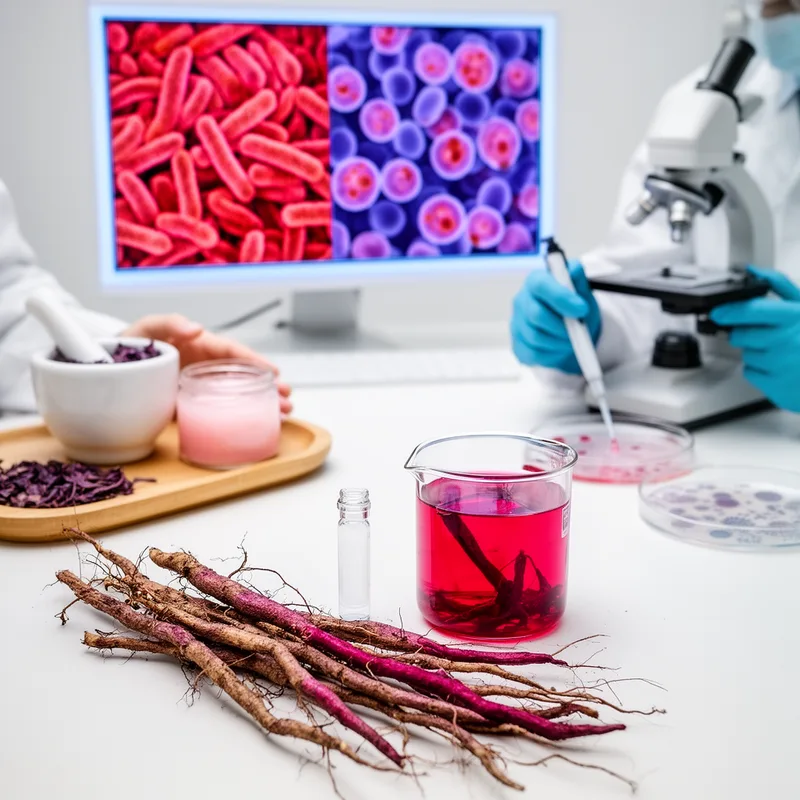
Shikonin comes from the Japanese word shikon, which means 'purple root'. People long ago used that root as a medicine, and the chemical was named after it, so shikonin now refers to the natural compound studied for antibacterial and anticancer effects.

