

shell-less
- adjective
- /ˈʃɛl.lɛs/
- The shell-less frog eggs float gently in the water, providing a unique sight for observers.
Examples
-
Some shell-less sea creatures, like certain nudibranchs, have vibrant colors that help them blend into their surroundings.
-
The masses of clear, shell-less, slimy frog eggs, each with a tiny black dot in their center, were more enticing than an untouched bowl of red jello.
Fiction book (1990) -
Tritonia and Melibe belong to the nudibranchs, a subset of opisthobranchs, many of which notably possess "naked gills" that frill their shell-less bodies.
Academic text (2009) -
Without a protective outer shell, these shell-less animals are more vulnerable to predators in their environment.
Synonyms


 1
4.4
1
4.4
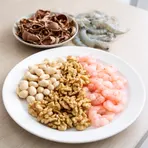
Having no hard outer covering, for example nuts or shrimp with that covering removed
Antonyms
How Shelled

Surface Forms
Morphology
Etymology
Shell-less comes from the word shell and the ending -less, where -less means 'without', just like in homeless or careless. So shell-less literally means an animal or fruit 'without' a shell.