
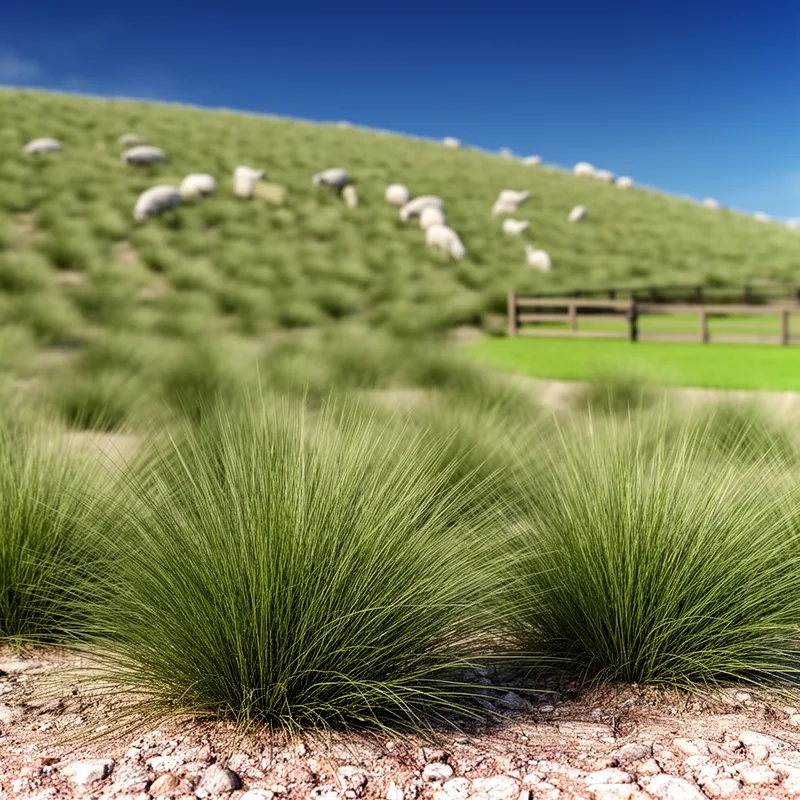
sheep's fescue
- noun
- /ʃips ˈfɛs.kju/
- Specialized
- During summer, the sheep grazed happily on the lush sheep's fescue that covered the hillsides.
Examples
-
Farmers often plant sheep's fescue in upland areas to provide nutritious pasturage for their sheep.
-
The green lawn was primarily made up of sheep's fescue, which thrived in the cool, high-altitude climate.
-
The most explicit example for this is the larvae of the Silver-spotted Skipper, which feed on sheep's fescue grass, which in turn is never allowed to grow too plentifully by grazing cows.
Synonyms

 2
7.7
2
7.7

A grass with wide flat leaves grown for pastures, hay, and lawns
A short thin grass used for sheep pasture and dry lawns

A grass that grows on poor hills, feeds sheep, and suits lawns

A grass that grows in clumps and is used for lawns and grazing
A grass with wide flat leaves grown for lawns and for animals to eat
Surface Forms
Morphology
sheep's + fescue
The noun is transparently compositional: 'sheep's' marks association/for sheep and 'fescue' names a type of grass, so the phrase simply denotes the grass used for or associated with sheep. This possessive/attributive pattern is straightforward and cross-linguistically common, so a B1 learner who knows both constituents would readily infer the meaning.
Etymology
Sheep's fescue may come from a simple image: small, fine grass called fescue that sheep's flocks ate, so people named it for the animal that used it. That's why the name now points to a fine, short grass 'for sheep' or for hardy lawns and pastures.