
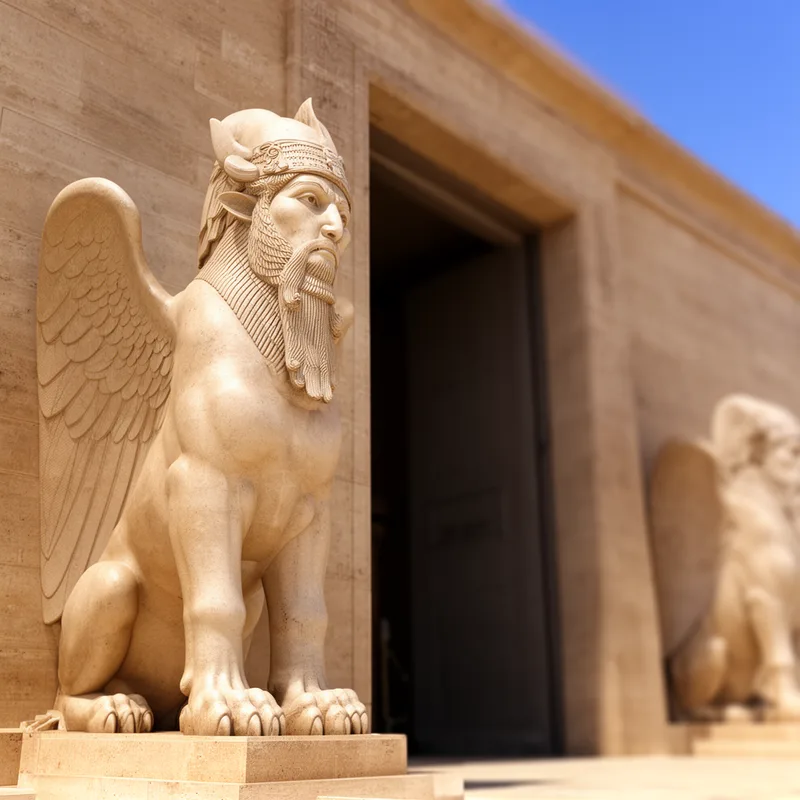
shedu


 1
9.9
- noun
- Literature
- Scholars studied the inscriptions carved into the wings of the shedu for clues about Mesopotamian beliefs.
Examples
-
Tourists marveled at the detailed features of the shedu statues standing outside the reconstructed palace.
-
The shedu guarded the entrance to the ancient temple.
-
The museum displayed a massive shedu that once guarded the entrance to an ancient temple.
-
Many shedus were found in archaeological sites across Mesopotamia.
-
Ancient temples often displayed a statue of a shedu at the entrance to guard against evil spirits.
-
In Mesopotamian mythology, a shedu is depicted as a powerful guardian with the body of a lion and the wings of an eagle.
-
He admired the intricately carved shedu that protected the doorway of the historic site.
Surface Forms
Etymology
Shedu comes from the ancient Akkadian word šēdu, which meant a 'protective spirit'. These spirits were shown as large statues—often a winged bull or lion with a human head—placed at doors to guard buildings, so shedu today means a guardian figure.