
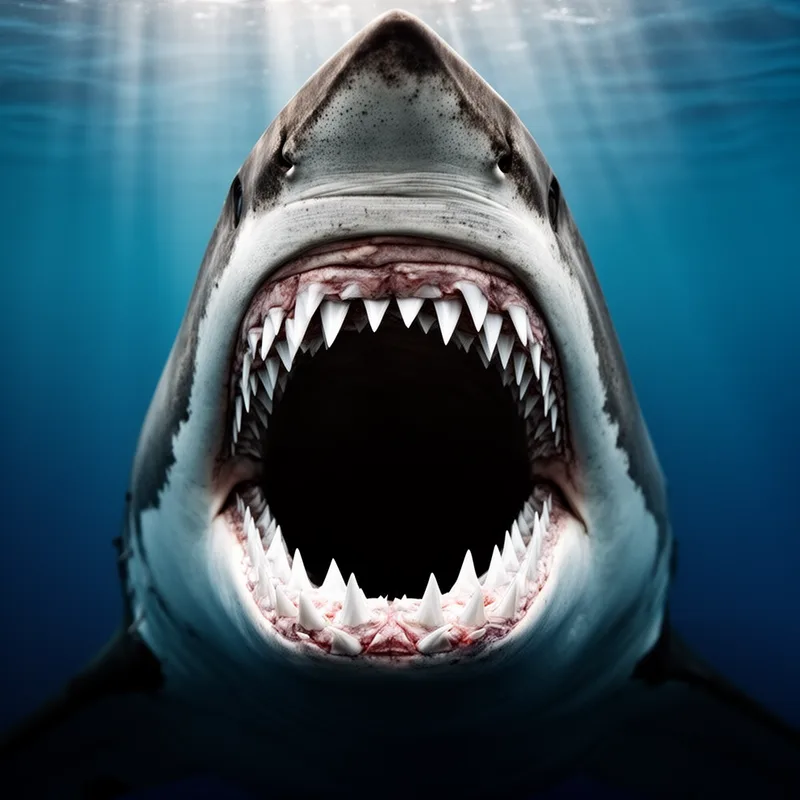
sharp teeth
 14
2.5
14
2.5

- noun
- Here too, the lion's fierce open mouth and sharp teeth are emphasized.
- razor-sharp teeth
- rows of sharp teeth
- big sharp teeth
Loading YouTube…
Watch on YouTubeDoes it have, does it have like, sharp teeth, I guess?
- Does it have, does it have like, sharp teeth, I guess?
- And we are alpha predators not because we have sharp claws or sharp teeth, but because we have this tool called the human brain.
Examples
-
The serpent's jaws open wide, revealing rows of razor-sharp teeth and a crimson red mouth.
Fiction book (2000) -
The mountain dogs with their sharp teeth gnaw uselessly at pieces of bone.
Fiction book (2000) -
You will need more than sharp teeth to win this competition.
-
We knew that this was a powerful beast with very sharp teeth.
-
The fish are too strong to be gutted live; they have sharp teeth.
Fiction book (1996) -
In general, predators have long, strong, and sharp teeth that catch and tear the flesh.
Blog text (29) -
Called from their nests, the squirrels leaped on him, biting with very sharp teeth.
Fiction book (1994) -
The dracowolf bit into his thigh with sharp teeth, a location protected by Paskaal's microweave.
Fiction book (1998) -
The lion's sharp teeth can easily tear through flesh.
-
The predator's sharp teeth enable it to hunt effectively in the wild.
Antonyms

Surface Forms
Morphology
The meaning is a straightforward composition of 'sharp' (having an edge or point that cuts) and 'teeth' (the biting structures), so a learner who knows both words can infer 'teeth that cut or pierce easily'. This adjective+noun pattern is common and cross-linguistically transparent, so a B1 learner would readily understand both literal and simple metaphorical uses.
Etymology
Sharp teeth comes from the image of animal teeth that look like little knives and the word sharp means able to 'cut or pierce'. So when an animal shows its sharp teeth, it can bite and cut prey, and the phrase means teeth that can 'cut or pierce' easily.