

shallow
 14
3.3
14
3.3

- noun
- /ˈʃæloʊ/
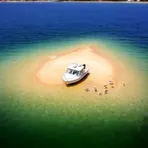
- At the beach, children love to play in the shallows where the water is safe and only comes up to their knees.
- coastal shallows
Loading YouTube…
Watch on YouTubeThat way more people can stand in the shallows and not have to learn how to swim.
- That way more people can stand in the shallows and not have to learn how to swim.
- Most of the others only live in near shore shallows.
- It struck the water in the shallows and dissolved into a muddy bloom, which these waves then swept away.
Examples
-
A good estuary needs shallows so the sun can nourish aquatic plants and plankton.
Fiction book (1999) -
If you can get us into the shallows, they won't be able to follow us now, will they?
-
But so it seems that they mostly stick to shallow waters in between the high and low tide areas.
-
Yes to the second, but only in so far as we keep to the shallows as much as possible.
-
That way more people can stand in the shallows and not have to learn how to swim.
-
Right here in the shallows.
-
She'll have to swim across the shallows for the last five miles alone.
-
Most species prefer to hunt in coastal shallows, but many can dive more than 100 feet underwater.
Academic text (2009) -
Holding a sharpened stick, Chuck wades in the shallows at low tide, looking for fish.
Fiction book (2000) -
For many years, treasure hunters stuck mainly to the shallows, where divers equipped with scuba gear could work easily.
Academic text (2007)
Synonyms

Compounds


- Specialized

 1
7.8
1
7.8
A boat with a bottom that does not go deep so it can move in shallow water

How Deep

Surface Forms
Etymology
The noun shallow comes from the same old English root sceald meaning 'not deep', and people say 'the shallows' for places in water that are low in depth. That is why fishermen and swimmers watch the shallows, because boats can get stuck where the water is not deep.