
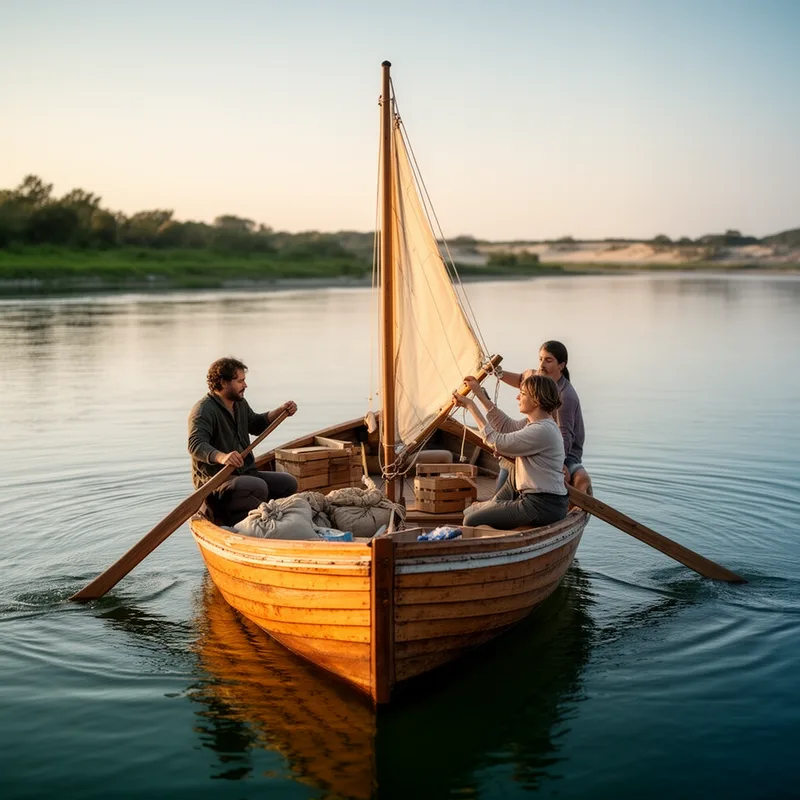
shallop


 1
9.9
- noun
- /ˈʃæl.əp/
- Archaic
- Using historic tools, methods, and indigenous woods, the boat builders and volunteers built a reproduction of John Smith's shallop in 2005.
Examples
-
Approximately 12 to 15 men manned the shallop.
Academic text (2007) -
His boat was a shallop, an open boat that was sailed or rowed.
Academic text (2007) -
Shallops were 5.8 to 12 m long and had two masts of equal height.
Academic text (1996) -
The first oyster vessels in Delaware Bay were shallops and small sloops.
Academic text (1996) -
Men will row and sail a replica of the "shallop" from Jamestown up the Chesapeake Bay and several tributaries, stopping along the way to talk about the world that the colonists would have experienced.
Academic text (2007) -
The replica of John Smith's shallop was built by the Sultana Projects organization at the Sultana Shipyard in Chestertown, Maryland (Figure 5).
Academic text (2007) -
The fisherman took his shallop out early in the morning to catch fish along the coast.
-
In the 17th century, a shallop was often used to transport goods between settlements along rivers.
-
They repaired the old shallop so it could be used for sailing on the nearby lake.
Synonyms
 44
1.1
A small boat that moves by wind using sails
 21
1.0
A boat that is small and used for short trips on lakes or rivers
 19
1.0
A small open boat moved with oars on lakes and rivers
 1
4.2
A small boat that a ship carries to move people between ship and shore
 1
9.9
A small boat that sells food and goods to ships at sea

A flat-bottomed boat that carries goods on rivers and river mouths
Surface Forms
Etymology
Shallop comes from older European words for a small boat, such as French chaloupe and the familiar English sloop. Think of a sloop — a simple 'small boat' with sails or oars — and you will remember a shallop is a light, open boat used on rivers or near the shore.