
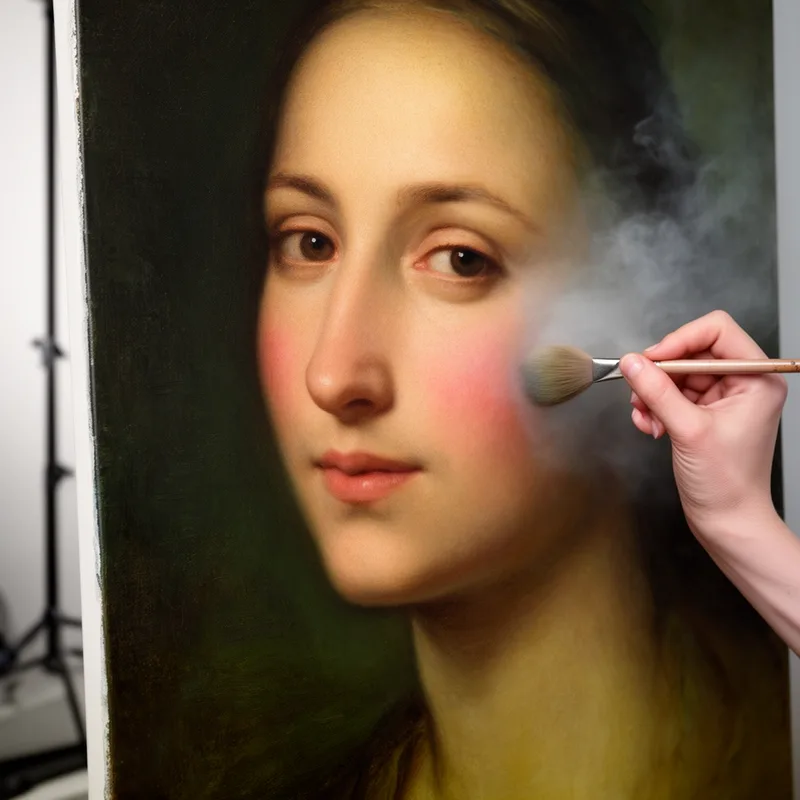
sfumato


 1
9.9
- noun
- /sfʊˈmɑːtoʊ/
- Specialized
- Alexander Nagel's comments on sfumato are particularly suggestive here: "Eliminating all evidence of the work and process of painting, sfumato likened painting to divine creation, which brought things forth from nothing."
- sfumato painting
Examples
-
Comments like these suggest how the sfumato painting (Fig. 10) might represent, include, or even constitute a kind of condensation, drawing aerial materials into shapes.
Academic text (2002) -
He renders flesh and muscle structure with a delicate sfumato, preferring subtle brushstrokes and lightly tinted washes of color to crisply defined lines.
Academic text (2008) -
The "Sfumato" technique is one of the strongest aspects of this film.
Blog text (20) -
His much-admired sfumato is the first sign of the repudiation of corporeal bounds in the name of space, and as such, it is the starting point of Impressionism.
Academic text (2000) -
Alexander Nagel's comments on sfumato are particularly suggestive here: "Eliminating all evidence of the work and process of painting, sfumato likened painting to divine creation, which brought things forth from nothing."
Academic text (2002) -
The artist used sfumato to create a dreamy quality in her landscape painting.
-
Leonardo da Vinci's use of sfumato made his portraits appear ethereal and lifelike.
-
In her artwork, the soft transitions of sfumato give the impression of a misty morning.
Synonyms
 1
9.9
A painting method brushing a thin, hazy layer of paint over another layer to soften the colour below
 1
9.9
A very thin layer of paint put over other paint to soften colors
How Blurred

Surface Forms
Etymology
The word sfumato comes from the Italian verb sfumare ('to fade') and from fumo ('smoke'), like the English word 'fume'. A sfumato is a painting technique that makes colors and tones fade into one another like mist or smoke, creating a soft, hazy effect.