
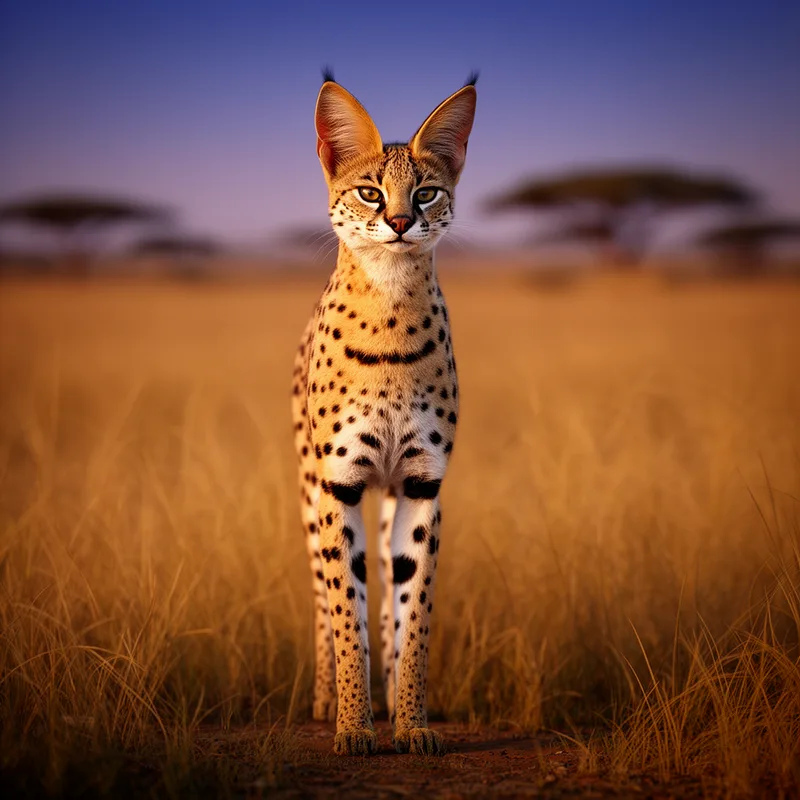
serval


 1
9.3
1
9.3
- noun
- /ˈsɜrvəl/
- South African
- A serval's large ears help it detect even the slightest movements of small animals in the bush.
- serval (Leptailurus)
- African serval
Examples
-
Servals, small, spotted, and usually nocturnal, can be observed resting in the grass or stalking an unwary prey before attacking with an exaggerated photogenic leap.
Academic text (2009) -
A serval cat is drafted into a game of tag.
-
To the credit of the guys that made the head, which was all serval motors, they gave that rubber face expression.
-
It's no fun for the serval, but the young cheetahs can safely test their skills against smaller teeth and claws.
-
One was all rubber for going through walls and doing fights and the other one was a serval motor on the inside of a skull mask.
-
Serval (Felis leptailurus, rare), Caracal (Felis lynx caracal, rare).
Academic text (2006) -
Other carnivores that were recognized by a large percentage of respondents were leopard (87.6%), jackal (68.1%), and serval (67.6%).
Academic text (2018) -
The serval is known for its ability to leap high in the air to catch birds.
-
In the tall grass, a serval stalked its prey before making a swift pounce.
Synonyms

A wild African cat with long legs, large ears, and spotted fur
Compounds
Surface Forms
Etymology
Serval came into English from French and probably from a local African or Portuguese name for the animal. Think of the name travelling with the animal from Africa to Europe, and that's why serval means the 'African wildcat' with long legs and spots.