
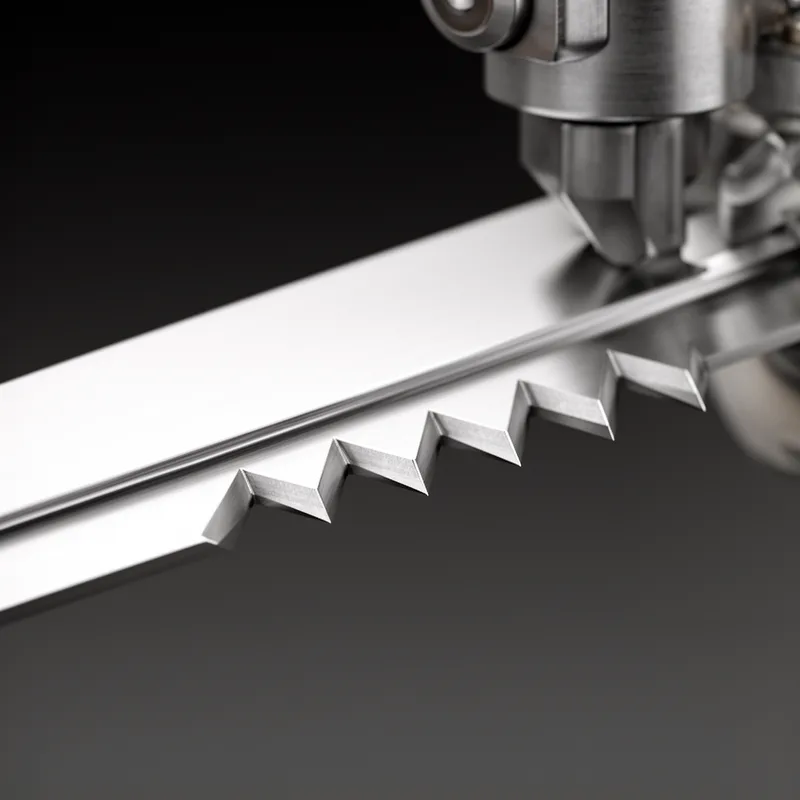
to serrate
 17
7.7
17
7.7

- verb
- /ˈsɛrət/
- serrated knife
- serrated edge
- serrated blade
Examples
-
The knife used was a heavy blade, 6 inches long with a serrated upper edge.
-
Do you have anything this size that's serrated?
-
I prefer this method to a serrated knife because it doesn't crush the dough.
Blog text (8) -
"Dude," Colby explained, holding a serrated carrot stick in the air as if in demonstration of his point.
Fiction book (2002) -
Right now her hand is slowly inching across the tablecloth toward a serrated knife.
Fiction book (2001) -
Jack's mother stood at the table coring apples with a sharp, serrated instrument.
Fiction book (2000) -
Seven-inch blade, partially serrated, well-balanced if you dip when you cut.
-
The skin abrasions, they're indicative of a knife with a partially serrated edge.
-
To cut the bread easily, use a serrated knife that makes clean, jagged slices.
-
He decided to serrate the edge of the cardboard to make it easier to tear.
Synonyms
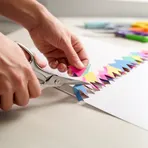
To cut notches or sharp points into something
Compounds
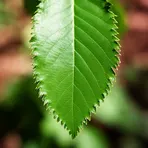
How Jagged

Surface Forms
Morphology
serrate = serr + ate
The verb is formed with the productive suffix '-ate' meaning 'to make or become', but the root 'serr-' (meaning 'saw') is not a familiar English base, so the derivation is only partly clear to learners.
Etymology
To serrate comes from the Latin serra, meaning 'saw'. It means to make small saw-like notches along an edge, so to serrate something is to give it a saw-toothed rim.