
sensorimotor
- adjective
- /ˌsɛn.səˈraɪˌmoʊ.tər/
- Specialized
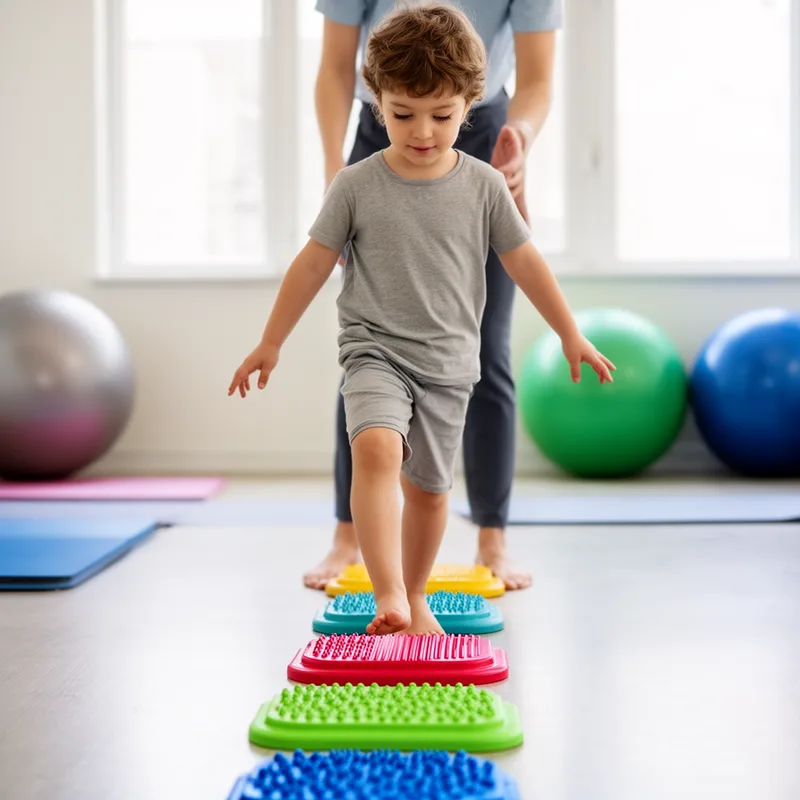
- During the sensorimotor stage of development, infants learn about the world by interacting with it through their senses and movements.
Examples
-
This is the way of knowing that we first experience in the first two years of life, during the stage of sensorimotor intelligence, when the foundations of our cognition are being laid (Piaget 1952).
Academic text (2000) -
Object identification is driven, in part, by the extent to which we have sensorimotor experience with the object.
Academic text (2018) -
Sensorimotor activity provides the cognitive foundation on which the judgment of what is comic is made.
Academic text (2001) -
These children were said to have problems in the perceptual, integrative, expressive, or sensorimotor processes necessary for learning, rather than in their basic intelligence.
Academic text (1996) -
The cognitive developmental modalities are sensorimotor, concrete, formal-operational, and dialectic/systemic.
Academic text (2007) -
Because the cognitive development of children is highly unstable, the incongruity in Cole's books that appeals to them has other origins, namely in purely sensorimotor assessment.
Academic text (2001) -
These procedures provide a response mode for many multiply handicapped children, whereby intact information processing ability can be assessed to a far greater extent than with infant assessment instruments loaded with sensorimotor content.
Academic text (1990) -
Hickok, G., Houde, J., & Rong, F. (2011). Sensorimotor integration in speech processing: Computational basis and neural organization. Neuron, 69, 407-422.
Academic text (2012) -
Children develop their understanding of the environment through sensorimotor experiences, such as touching and manipulating objects.
-
Activities that enhance sensorimotor skills are crucial for early childhood education, as they support both physical and cognitive growth.
Compounds
Surface Forms
Morphology
Etymology
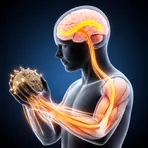
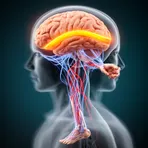
Sensorimotor is made of sensor (meaning 'to sense' or 'feel', like the English word 'sense') and motor (meaning 'to move', like a car's 'motor'), so it describes how sensing and moving work together.

