
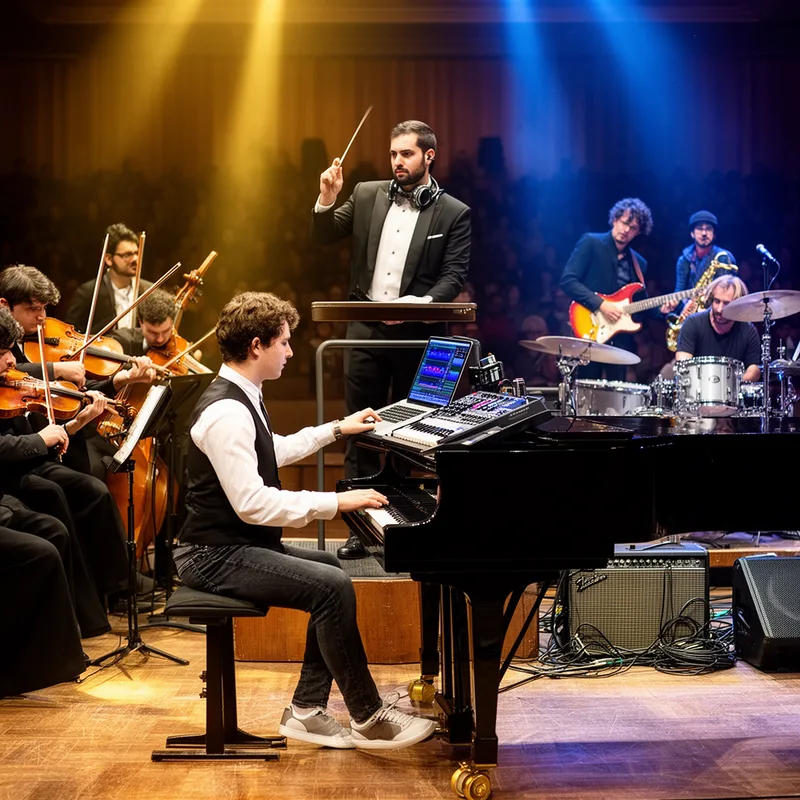
semiclassically
- adverb
- /ˌsɛmɪˈklæsɪkli/
- The pianist played semiclassically, mixing classical technique with pop influences.
Examples
-
She choreographed the dance semiclassically, blending ballet with modern moves.
-
The orchestra performed the piece semiclassically, adding jazz rhythms to the traditional melody.
-
Wow! That was a fantastic performance done semiclassically!
-
The orchestra played semiclassically to appeal to a wider audience.
-
The orchestra performed the piece semiclassically, adding jazz rhythms to the traditional melody.
-
She choreographed the dance semiclassically, blending ballet with modern moves.
-
The pianist played semiclassically, mixing classical technique with pop influences.
How Classical


Surface Forms
Morphology
semiclassically = semiclassical (semi-transparent) = semi + class + ical + ly
The target is the regular adverbial -ly form of the adjective 'semiclassical'.
Etymology
The word semiclassically comes from semi- meaning 'partly' and classical meaning 'traditional' or 'from classical music', like in semi-final where semi- means 'half'. So to perform or arrange something semiclassically is to mix classical style with modern or popular elements.