
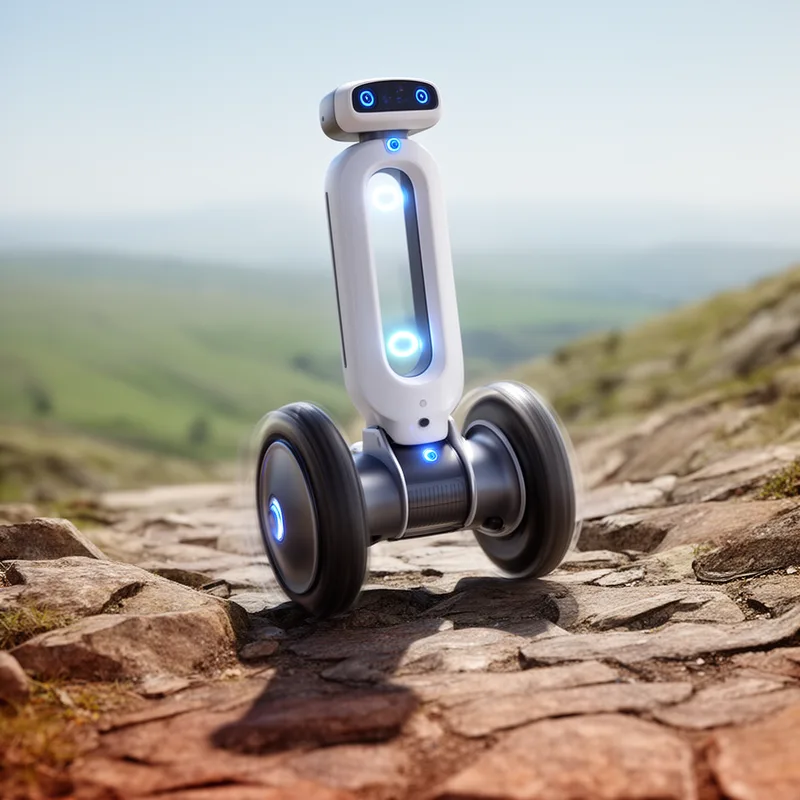
self-balancing


 1
5.2
1
5.2
- adjective
- /sɛlfˈbælənʧɪŋ/
- In official discourse, the bounded and self-balancing hydrohub is a hybrid of physical and ecological systems.
Examples
-
This is a self-balancing electric unicycle, capable of speeds up to 15 miles per hour and with a range of 10 miles.
Blog text (9) -
This fully electric, two-wheeled vehicle is self-balancing, using a pair of flywheels to maintain stability in all conditions.
Blog text (29) -
But if the self-balancing technology is indeed applicable to other e-bikes, then it is the e-bike balance controller market that they are addressing, and this could potentially be big enough to drive a large company.
Blog text (9) -
Inside the package I found the self balancing unicycle or SBU version three, an alternate seat height shaft, a charger, a set of keys and finally the manual.
-
This is a self-balancing electric unicycle, capable of speeds up to 15 miles per hour and with a range of 10 miles.
-
This fully electric, two-wheeled vehicle is self-balancing, using a pair of flywheels to maintain stability in all conditions.
-
Inside the package I found the self-balancing unicycle or SBU version three, an alternate seat height shaft, a charger, a set of keys and finally the manual.
Synonyms
 1
3.7
1
3.7
Making something steady and less likely to change suddenly

That controls itself without outside help
Antonyms

How Stable

Surface Forms
Morphology
self-balancing = balancing (transparent) = self + balance + ing
Formed by adding the productive prefix 'self-' to the participial base 'balancing' (balance + -ing), giving the clear meaning 'able to balance itself'.
Etymology
Self-balancing combines self- ('by itself') and balancing (from balance, 'steady'). A self-balancing device keeps itself 'steady' on its own, so scooters, robots, or boats that stay upright without outside help are called self-balancing.