
selenic acid
- noun
- /səˈlɛnɪk ˈæsɪd/
- Specialized
- Exposure to selenic acid should be carefully controlled due to its strong oxidizing properties.
Examples
-
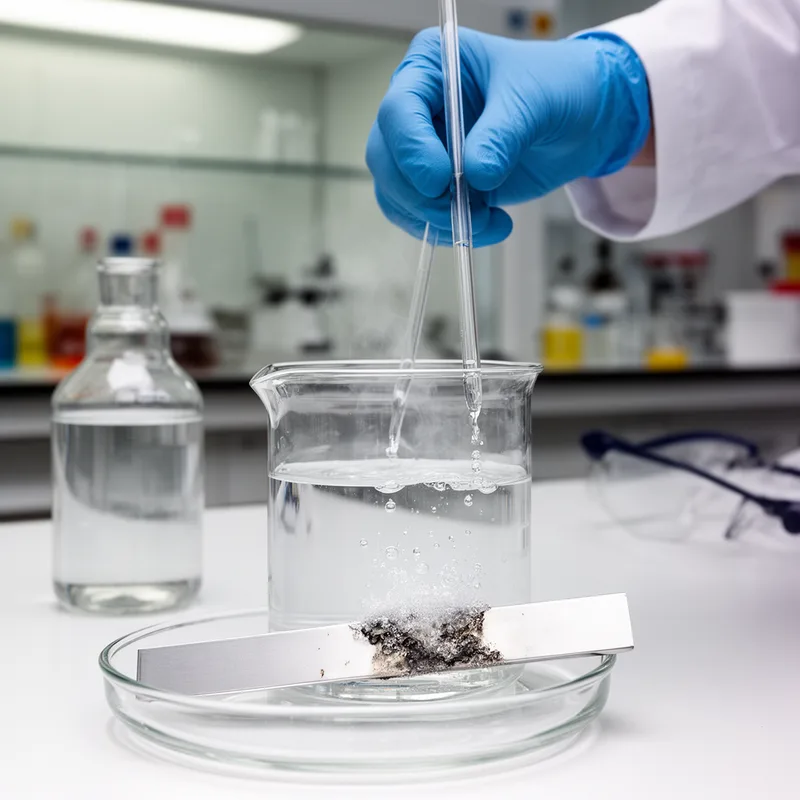
Laboratory tests revealed that selenic acid can oxidize many metals quickly.
-
Researchers compared the efficacy of selenic acid with sulfuric acid in catalyzing the reaction.
-
The laboratory uses selenic acid for various experiments.
-
Many chemists prefer selenic acid over sulfuric acid in certain reactions.
-
In the laboratory, selenic acid is often used as a powerful oxidizing agent for various chemical reactions.
-
Chemists utilize selenic acid to enhance the oxidation of metals during their experiments.
-
Due to its strong oxidizing properties, selenic acid requires careful handling in chemical processes.
Surface Forms
Morphology
selenic + acid
The compound is a straightforward compositional name: 'selenic' (relating to the element selenium) combined with 'acid' (an inorganic acid) yields 'an acid of selenium', which matches the given definition. Although 'selenic' is technical, the pattern of naming acids from element-derived adjectives is cross-linguistically regular, so a learner who knows both constituents will be able to infer the meaning.
Etymology
Selenic acid is the 'acid' of the element selenium, and selenium was named from the old Greek word for the 'moon' when scientists first found it. So the name gives a simple memory picture: selenic acid is the strong acid made from selenium and used in chemical reactions.

