
seicento
- noun
- /seɪˈtʃɛntoʊ/
- Specialized
- Most of these tombs belong to the late seicento or early settecento, but the dynastic, fraternal, and martyrial spirit that gave rise to them was centuries old.
- early seicento
- Seicento art
Examples
-
Seicento biographies of artists were as closely controlled by classical and Christianized rhetoric, as earlier art history and criticism more generally can indeed be shown.
Academic text (1991) -
The archival record, as I know it, suggests that in the early Seicento, the Knights—at least on the level of an organization—were not heavily preoccupied with artistic concerns.
Academic text (2012) -
In these ways, they have concluded, Seicento writers were operating within the framework established by Vasari.
Academic text (1991) -
In the early Seicento, a Tuscan galley crew was usually a little less than one-third.
Academic text (2015) -
But these same scholars were also on the lookout for differences between the Seicento authors and Vasari.
Academic text (1991) -
What otherwise might have been just one more triumphalist monument of many becomes a way to reflect on social conditions in this port city, both for viewers of the early seicento as well as those of our own time.
Academic text (2015) -
The Lives of Baglione and Passeri are still further instances of the writing of art history and criticism in the seicento as civic panegyrics, and there were many others.
Academic text (1991) -
A fundamental source for understanding the Knights' attitude toward nobility may be found in another unpublished manuscript of the late Seicento by Fra Giovanni Maria Caravita.
Academic text (2012) -
As for art criticism proper, if this criticism was the application of classical rhetoric, as I have been arguing, specifically of panegyrical rhetoric, we should find critics of the Seicento claiming that art was "reborn" not in Florence but in their own cities or regions and that perfection was achieved not by Michelangelo but rather by one or several artists from these other places.
Academic text (1991) -
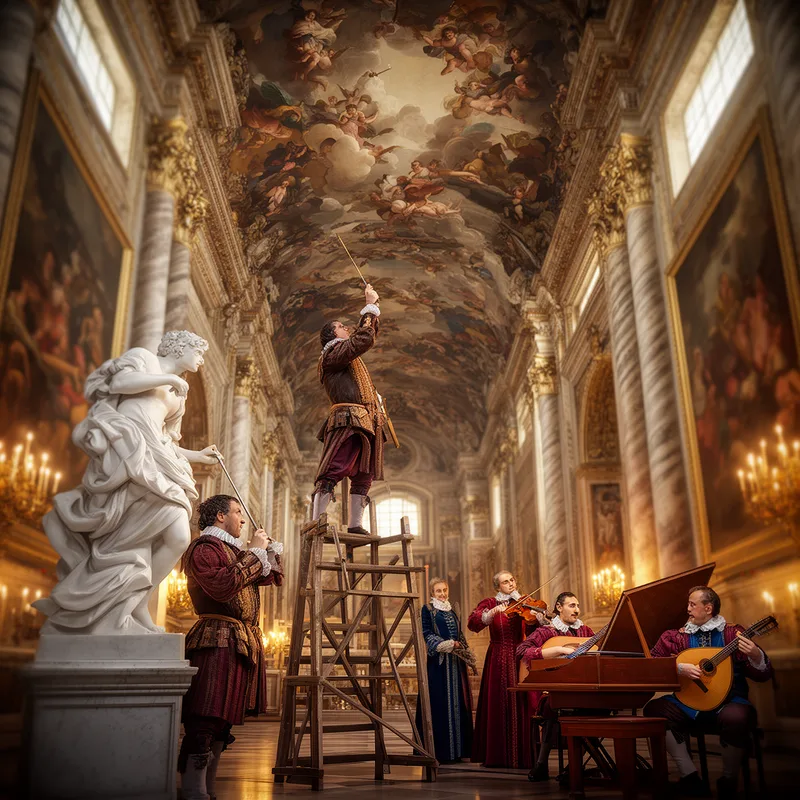
The art styles developed during the seicento reflect the rich cultural changes of 17th century Italy.
Surface Forms
Etymology
Seicento comes from the Italian parts sei 'six' and cento 'hundred'. It is used like English 'the 1600s' to mean the 17th century, so when people talk about the Seicento they mean Italian art and culture from that time.

