
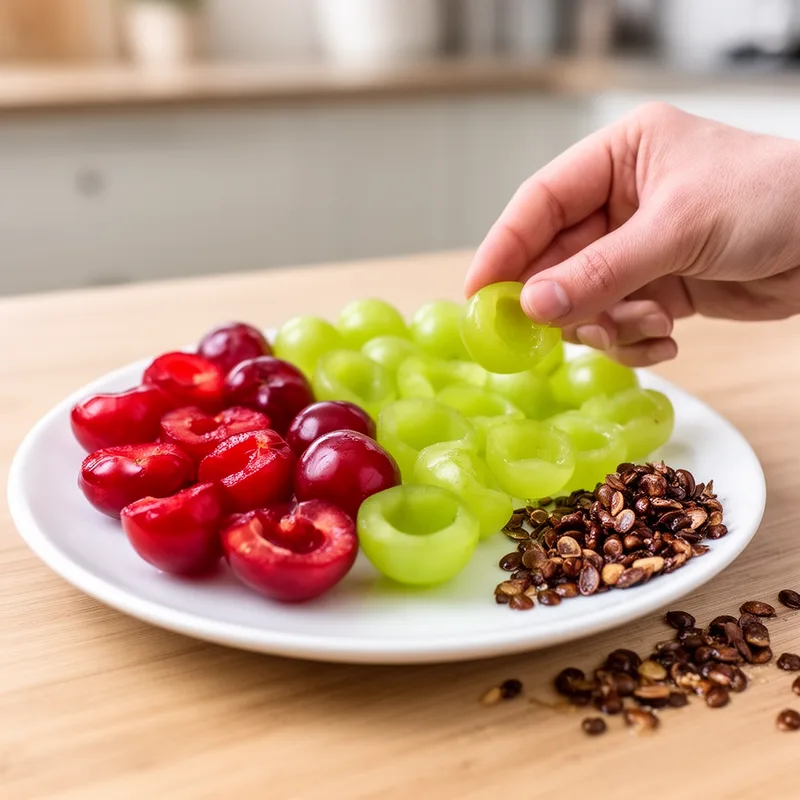
seeded
- adjective
- /ˈsiːdɪd/
- I always choose seeded grapes for my fruit salad because they taste better without the seeds.
Examples
-
The chef used seeded tomatoes for the sauce.
-
The recipe calls for seeded cucumbers.
-
I prefer seeded grapes because they are easier to eat.
-
She used seeded cherries to make the pie.
-
The bakery sells seeded bread as well as whole wheat bread.
-
The chef added seeded cherries to the dessert to enhance its flavor.
-
When making a salad, it's best to use seeded cucumbers to ensure a smoother texture.
Synonyms

 5
3.1
5
3.1

Plants or fruit that have no small hard parts inside and are easy to eat
Compounds

- Jargon

 1
4.4
1
4.4
A player ranked among the best in a tournament who is placed to avoid other top players early


- Indian
A leafy green plant with small prickly seeds that people grow for its tender dark leaves used in cooking


A small weed with round leaves that grows in open disturbed ground in North America



Surface Forms
Morphology
Etymology
The word seeded can also come from the verb to seed, which has been used both for 'putting in seeds' and for 'taking seeds out'. A helpful way to remember this is that when fruit is seeded here, it often means the seeds have been removed so it is easier to eat.