
second power
 1
3.2
1
3.2

- noun
- /ˈsɛkənd ˈpaʊər/
- Specialized
- So instead of X to the second power, it's going to be X to the third divided by three, and we'll clean that up later.
- second power equals
Loading YouTube…
Watch on YouTubeSo instead of X to the second power, it's going to be X to the third divided by three, and we'll clean that up later.
- So instead of X to the second power, it's going to be X to the third divided by three, and we'll clean that up later.
Examples
-
These are the equations to the first and second power...
-
These are raised to the second power, so you could either factor these both down one more time.
-
If they raised it to the second power, it was still too sudden.
-
If, on the other hand, we wrap this function in parentheses and we raise it to the second power like this.
-
An incomplete quadratic equation contains a second power...
-
If you raise 5 to the second power, you get 25.
-
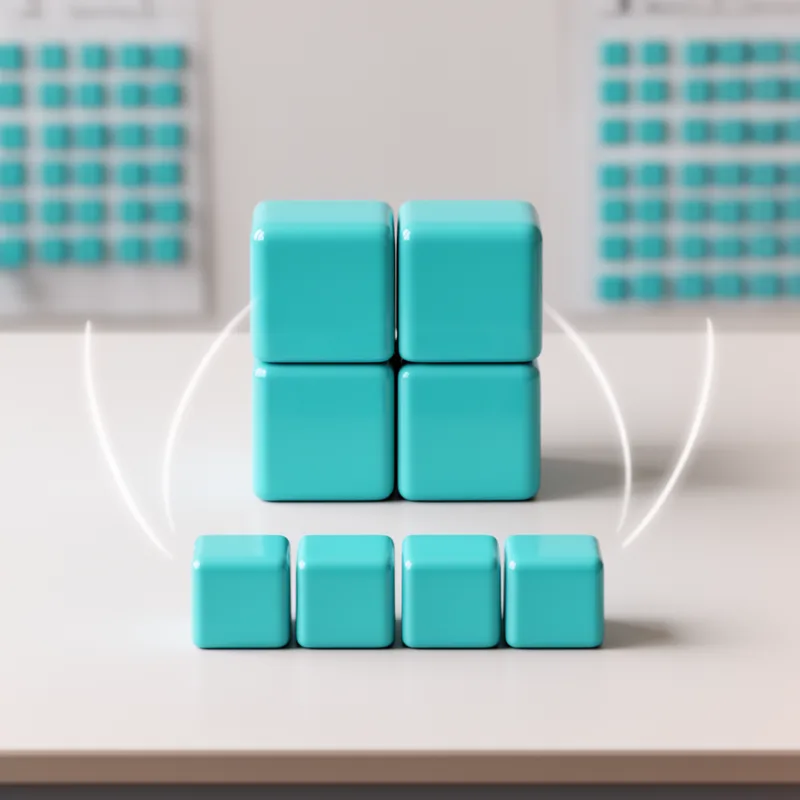
The area of a square is calculated by multiplying the length of one side by itself, or raising it to the second power.
-
To find the height of the cube, we must first calculate its volume by raising its edge length to the second power.
Synonyms
 24
1.7
24
1.7
The result of multiplying a number by itself
Surface Forms
Morphology
A B1 learner who knows 'second' as indicating two and 'power' as an exponent/operation will readily infer that 'second power' means raising a number to the power of two (the square). This is a straightforward, compositional mathematical term following common cross-linguistic naming conventions, so the meaning is directly derivable from the constituents.
Etymology
The term second power comes from the simple idea of using a number twice — multiplying a number by itself. The word second shows the repeated use and power means 'raise', so a square with side 3 has area 3 × 3 and second power means 'the square' of a number.