

sea robin
- noun
- /ˈsiː ˈrɒbɪn/
- Specialized
- The fisherman was surprised to find a sea robin in his net along with flounder and crabs.
Examples
-
Some anglers release sea robins because of their firm, bony bodies and unusual appearance.
-
A sea robin can often be seen gliding along the sandy bottoms near the shore.
-
The sea robin is known for its unique appearance.
-
Have you ever seen a sea robin at the beach?
-
The fisherman was excited to catch a sea robin with its colorful fins while exploring the estuary.
-
During our marine biology lesson, we learned about the unique features of the sea robin, especially its bony head.
-
While fishing in the bay, we spotted a sea robin swimming near the sandy bottom, showcasing its distinctive pectoral fins.
Synonyms
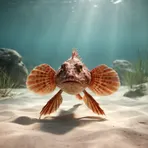
A sea fish like a sea robin with large wing-like fins used to move along the sea floor

A sea fish with a hard bony head and large winglike side fins often found near coasts

A large sea robin fish found in Atlantic coastal waters from Nova Scotia to Florida

A large sea fish with big front fins that stirs sand to find food

A fish that has bony plates on its sides and chin whiskers for finding food on the sea floor
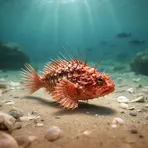
A small sea fish with bony armor and spiny fins
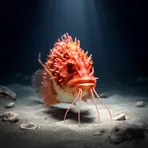
A small sea fish with bony plates and chin whiskers that lives on the deep sea floor
How Armored


Surface Forms
Morphology
sea + robin
The compound is clearly built from 'sea' + 'robin', so learners will infer it names some creature associated with the sea and perhaps resembling a robin in some respect. However, the specific meaning—referring to a bottom-dwelling fish rather than a seabird—is not directly predictable from the constituents, so the relation is only partially transparent.
Etymology
The noun sea robin comes from how the fish looks and moves. Its large, winglike pectoral fins spread like a bird's wings and its fingerlike lower fins seem to 'walk' along the sea floor, so people called it a little robin of the sea.