
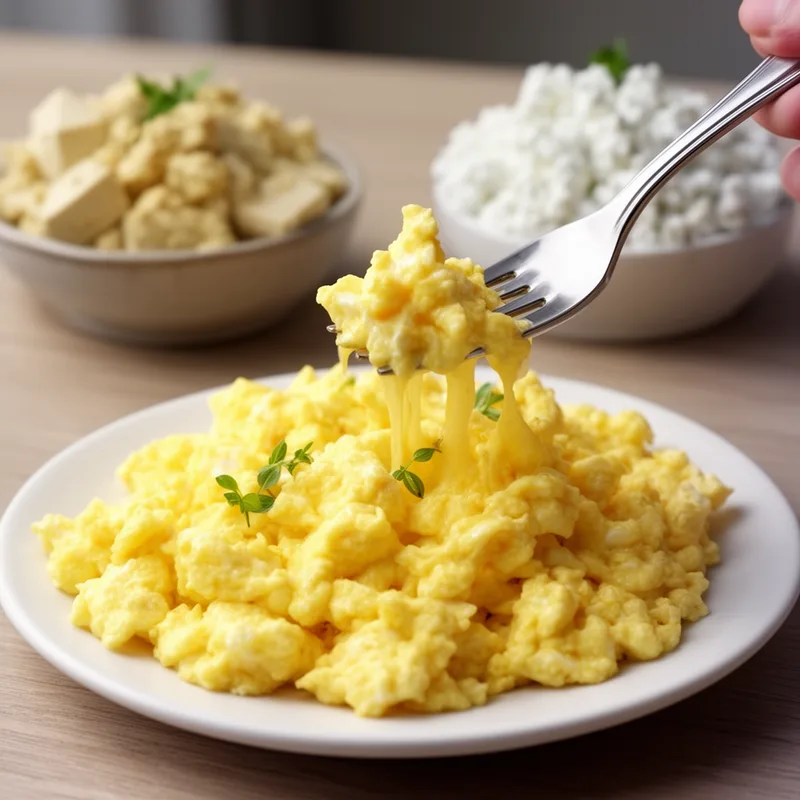
scrambly
- adjective
- /ˈskræmbli/
- The chef served a plate of scrambly eggs with fresh herbs on top.
Examples
-
The cottage cheese had a scrambly consistency that paired well with fruit.
-
She likes her tofu cooked until it is soft and scrambly for breakfast.
-
The eggs were scrambly and delicious.
-
I love a scrambly breakfast on weekends.
-
The chef served a plate of scrambly eggs with fresh herbs on top.
-
She likes her tofu cooked until it is soft and scrambly for breakfast.
-
The cottage cheese had a scrambly consistency that paired well with fruit.
Synonyms
 39
2.2
39
2.2

Not smooth because it has small pieces in it
 18
2.0
18
2.0
Soft and wet like cooked vegetables or very ripe bananas
 1
3.6
1
3.6
Soft and easy to crush, often wet or spongy

 1
2.8
1
2.8
Having a strong egg taste, smell, or texture often because it contains many eggs

Having small soft lumps like those that form in sour milk

Soft and mushy in texture like overcooked porridge
Antonyms

How Soft

Surface Forms
Morphology
Etymology
Scrambly comes from the verb scramble plus the ending -y, where -y means 'full of'. Think of scrambled eggs: they are soft and in small pieces, so something 'scrambly' has that soft, loose texture.