
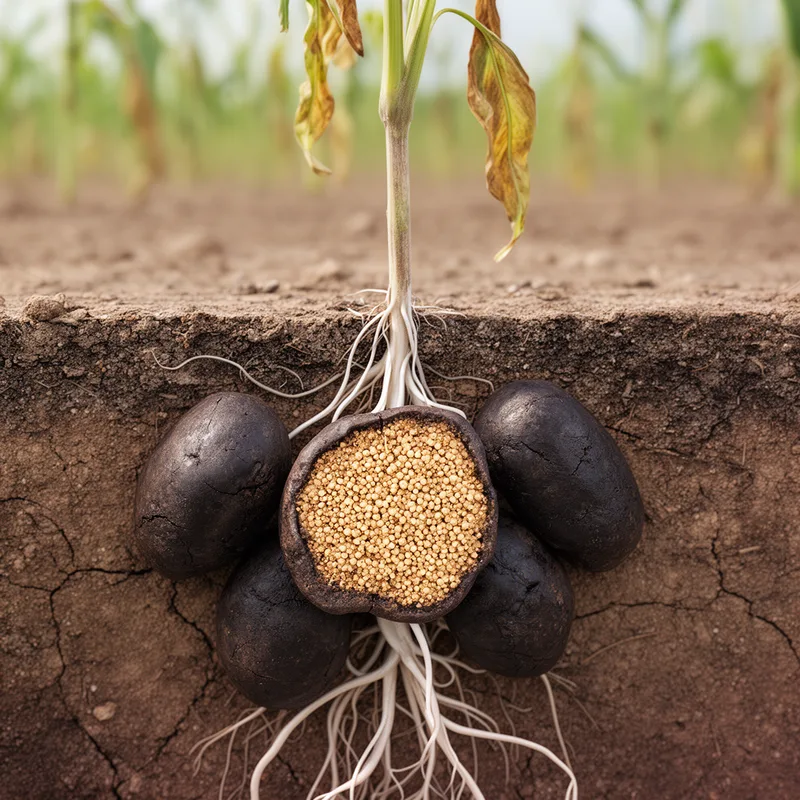
sclerotium


 1
9.9
- noun
- /skləˈroʊtiəm/
- Specialized
- The sclerotium of the fungus can survive extreme conditions.
Examples
-
Farmers often find sclerotia in the soil after a wet season.
-
The soil was infected with sclerotium, causing the crops to wilt and die.
-
Certain plants are particularly vulnerable to sclerotium infestations, which can devastate harvests.
-
Researchers studied the life cycle of sclerotium to understand how it spreads in plants.
-
The sclerotium of the fungus can survive extreme conditions, enabling it to thrive even in drought.
-
Farmers often find sclerotium in the soil after a wet season, which can indicate fungal activity.
-
The soil was infected with sclerotium, leading to significant crop damage and loss.
Compounds

- Specialized
1
9.3
A plant disease caused by a fungus that forms hard, dark lumps on roots or stems

- Specialized
A plant disease caused by a fungus that makes hard white lumps on stems and roots
Surface Forms
Morphology
sclerotium = sclerot + ium
The word is built from Greek combining forms ('sclerot-' = hard) plus a classical noun suffix '-ium'; this technical formation is not transparently analyzable by an average B1 learner into familiar English words or meanings.
Etymology
Sclerotium comes from the Greek root skleros, which means 'hard', and the same root is in the word sclerosis. A sclerotium is therefore a 'hard' firm mass that some fungi make to store food and 'survive' bad conditions.