
schwannoma
- noun
- /ʃwɑːnˈnoʊmə/
- Specialized
- Ancient schwannoma is a rare variant of schwannoma with a course typical of a slow-growing benign tumor.
- benign schwannoma
- malignant schwannoma
- vestibular schwannoma
Examples
-
The absence of mitotic activity is the key feature to differentiate benign ancient schwannomas from malignant schwannomas.
Academic text (2007) -
Symptoms and signs associated with sinonasal schwannomas include rhinorrhea, epistaxis, anosmia, and facial swelling.
Academic text (2007) -
Between 25% and 45% of schwannomas occur in the head and neck.
Academic text (2005) -
We report a case of supraglottic schwannoma in a 59-year-old woman.
Academic text (2005) -
An unusual case of an ancient schwannoma of the submandibular gland is reported.
Academic text (1996) -
A diagnosis of ancient schwannoma was made, and the tumor was excised under general anesthesia.
Academic text (2007) -
Current philosophies of facial nerve schwannoma management attempt to balance tumor control with facial nerve function.
Academic text (2008) -
The mass was confirmed as a facial nerve schwannoma by neural probe stimulation.
Academic text (2008) -
Management options for both vestibular schwannomas and glomus jugulare tumors include observation, surgery, and radiotherapy.
Academic text (2005) -
Between 25% and 45% of schwannomas occur in the head and neck.
Synonyms

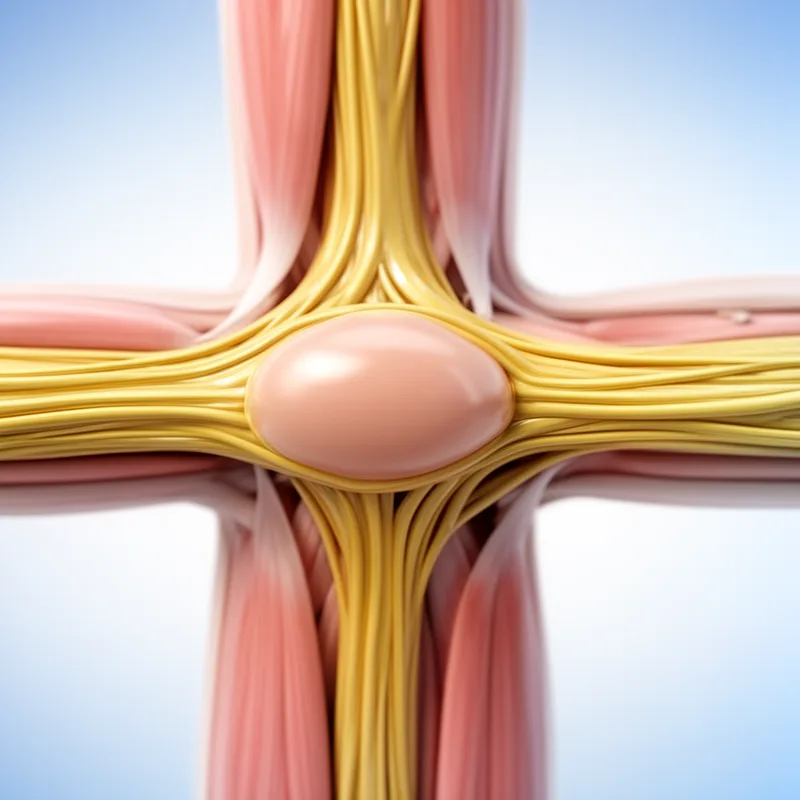
A growth on the covering of a nerve that is often not cancer

A non-cancerous lump that grows from the covering of a nerve
Surface Forms
Morphology
Etymology
Schwannoma comes from the name of the German scientist Schwann and the ending -oma, which means 'tumor', like in melanoma. So a Schwannoma is a tumor made from the special Schwann cells that cover nerves, which is why it often presses on nerves and can cause pain or numbness.

