
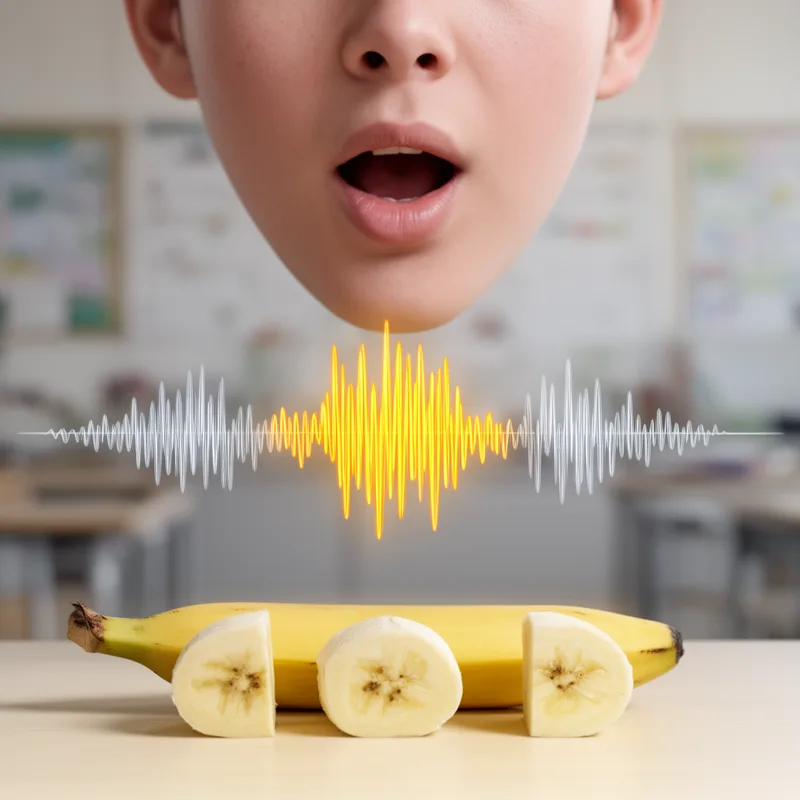
schwa


 1
9.9
1
9.9
- noun
- /ʃwɑ/
- Specialized
- Many English learners struggle to identify the schwa sound in unstressed syllables.
- duration of the schwa
- schwa vowel
Examples
-
In the word 'sofa', the last syllable contains a schwa sound, pronounced as /ə/.
-
To further examine this difference, independent-samples t-tests were conducted to compare the schwa durations for each plural type between the children and adults (see Table 3).
Academic text (2013) -
But if you were instead to insert a schwa, well, that would fix it too, right?
-
In case you think that schwa sounds kind of German, that's because it is kind of German.
-
The final vowel in words with a strong-weak stress pattern, such as feather and tiger, was transcribed as rhoticized schwa.
Academic text (2015) -
The second vowel in words like basket and carrot was transcribed as schwa, not /I/, and was therefore analyzed as an unstressed syllable.
Academic text (2015) -
When saying 'banana', the second syllable features a schwa that is often overlooked.
Synonyms
A very weak vowel sound you hear after some consonants in weak syllables
How Reduced

Surface Forms
Etymology
Schwa comes from the Hebrew word shva, which means 'empty' or 'rest'. A helpful way to remember it is to think of the schwa as an 'empty' or very weak vowel, the quiet neutral sound you hear in unstressed parts of words such as the first and last vowels of 'banana', and that is why it sounds soft and unstressed.