

saxifrage family
- noun
- /ˈsæksɪˌfreɪdʒ ˈfæmɪli/
- Specialized
- Many alpine plants belong to the saxifrage family, thriving in rocky, mountainous environments.
Examples
-
Botanists sometimes debate whether certain genera should be classified within the saxifrage family or in separate families.
-
The saxifrage family includes both evergreen and deciduous species found across the Northern Hemisphere.
-
The saxifrage family includes many species that thrive in rocky soils.
-
Did you know that the saxifrage family contains over 400 species?
-
Many alpine plants belong to the saxifrage family, thriving in rocky, mountainous environments.
-
The saxifrage family includes both evergreen and deciduous species found across the Northern Hemisphere.
-
Botanists sometimes debate whether certain genera should be classified within the saxifrage family or in separate families.
Synonyms
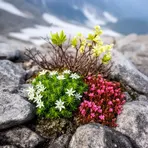
A family of small flowering plants that grow in cool or mountain regions
Surface Forms
Morphology
The meaning is directly compositional: ‘saxifrage’ (the plant/genus) combined with ‘family’ (a taxonomic grouping) yields the family that contains saxifrages. This noun + family construction is a regular, cross‑linguistically common pattern and would be predictable to a B1 learner who knows both constituent words.
Etymology
Saxifrage family may come from the old Latin word saxifrage, which combines words meaning 'rock' and 'to break'. Many of these plants grow in cracks in rocks and seem to 'break' the stone, so the name helps you remember that they are often found in rocky, mountainous places.

