
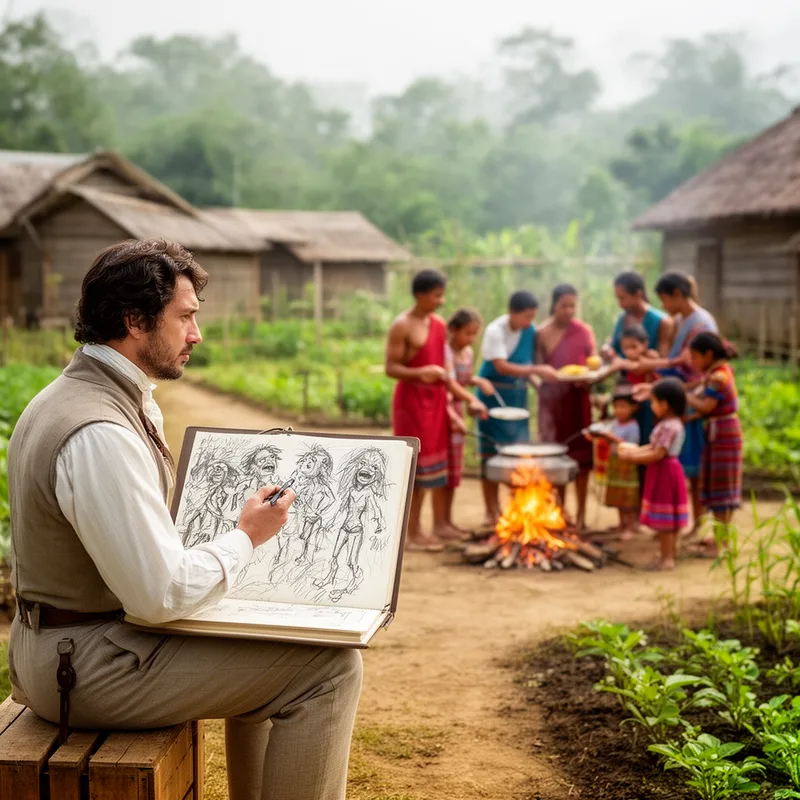
savagism
- noun
- /ˈsævəˌdʒɪzəm/
- Offensive
- His novel depicts the clash between civilization and savagism in a remote jungle community.
Examples
-
Many historians debate the concept of savagism when discussing the colonization of various regions.
-
In the nineteenth century, it was called savagism and civilization, and it never served Indians well.
Academic text (2011) -
Dvorak pursued the hyperrealities of tribal cultures, the structured ceremonies at the tenable borders of civilization in a small town, imagined tribal music as an instance of nationalism, and worried about his daughter being too close to savagism.
Academic text (1990) -
The documentary explored the effects of savagism on indigenous societies and their struggle for recognition.
Antonyms



How Civilized


Surface Forms
Morphology
Etymology
Savagism comes from savage and the ending -ism. Because savage originally comes from the Latin word silva meaning 'wood' and 'wild', people used it to mean 'outside town' or 'uncivilized', so savagism can mean the state of being primitive or lacking social development.