
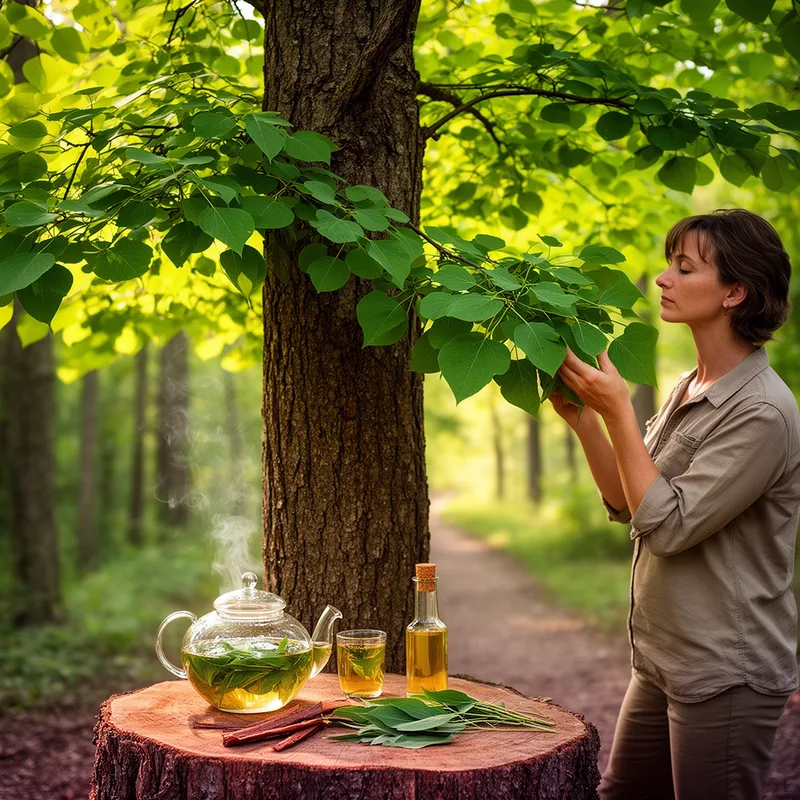
sassafras albidum
- noun
- /ˌsæsəˈfræs ˈælbaɪdəm/
- Specialized
- The forest path was lined with several mature sassafras albidum trees.
Examples
-
The fragrant bark of sassafras albidum is often distilled to produce sassafras oil for flavoring.
-
The leaves of sassafras albidum are often used to make traditional teas in some regions.
-
Researchers study sassafras albidum for its unique aromatic compounds found in the bark.
-
The sassafras albidum tree can grow up to 50 feet tall.
-
Many herbalists use sassafras albidum for its medicinal properties.
-
The leaves of sassafras albidum are known for their distinct aroma, making them popular in herbal teas.
-
In the eastern United States, sassafras albidum is commonly found in wetland areas and forests.
Synonyms

A North American tree with strong smelling leaves and bark used to make oil and tea

A North American tree with leaves and bark that have a strong smell and are used for flavoring and medicine
Surface Forms
Morphology
sassafras + albidum
The first constituent 'sassafras' clearly names the genus and signals a type of tree, so a learner can infer the phrase refers to a kind of sassafras. The second element 'albidum' is a Latin species epithet (not a common English word) and does not transparently add descriptive meaning to a B1 learner, so the overall sense is partially but not fully derivable.
Etymology
Sassafras albidum takes its name from the common word sassafras and the Latin word albidum, meaning 'white', likely for the tree's pale wood or the light color under its leaves. Early settlers and Native Americans used the strongly smelling bark and leaves to make tea and oil, so the name now brings to mind a fragrant North American tree used for flavor and medicine.

